Skip to content

Maritime claims · Commercial recovery · Principal buying

Commercial Recovery for Maritime Lawyers,
P&I Clubs & Shipowners

Commercial solutions for complex cargo claims. Pommer & Partners supports maritime lawyers, P&I Clubs, shipowners, insurers and cargo interests with the commercial assessment and recovery of distressed cargo. Depending on the circumstances, we may act as a principal buyer, identify alternative markets or coordinate a practical recovery solution.

A commercial counterparty alongside the legal and technical file.

Once a cargo is damaged, rejected, off specification, abandoned or otherwise distressed, the legal position and the commercial position have to be resolved in parallel. Pommer & Partners works on the commercial side: what the cargo is still worth, who can lawfully take it, where it can go, and what the realistic net effect of each option is.

Depending on the case that may mean direct purchase as principal, identification of alternative markets and buyers, remarketing, or coordination of a practical recovery solution. Not every assignment involves a written advisory report, and not every cargo is purchased with our own capital.

Pommer & Partners is not a law firm, insurer, P&I Club, appointed claims handler or independent legal adviser. Legal advice, regulatory approvals, cargo classification and technical determinations remain with the appropriate qualified parties and authorities.

Submit a cargo case

Send the commodity, quantity, current location, condition and any survey or laboratory findings available. We revert with the commercial options we consider realistic.

Please send only the information required for an initial review. Legally privileged or highly confidential documents should not be transmitted until the instructing party and the scope of the commercial discussion have been confirmed.

Submit a Cargo CaseContact Pommer & Partners

contact@pommerpartners.com · +49 221 405027

  • Maritime lawyers
  • P&I Clubs and correspondents
  • Shipowners and ship managers
  • Marine and cargo insurers
  • Cargo interests and traders
  • Surveyors and loss adjusters
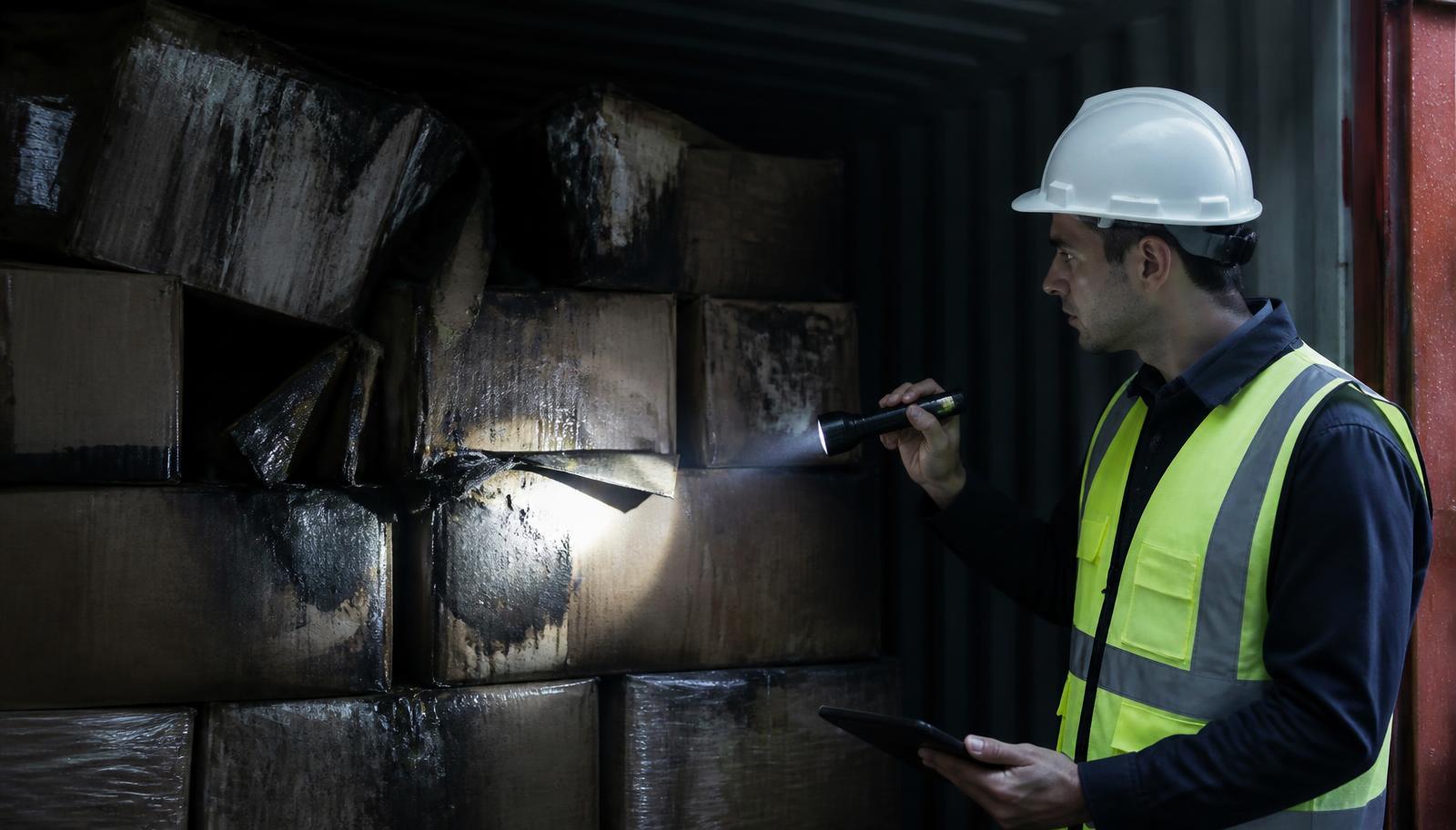
Cargo survey in progress on board a commercial vessel

How a commercial recovery assessment works

Four stages, in the order a claim actually moves.

Each stage depends on the information genuinely available. Where a stage cannot be completed on the material at hand, the gap is stated rather than filled with assumptions.

  1. 01

    Case assessment

    The available cargo information is reviewed: commodity, quantity, location, condition, survey findings, contractual constraints, discharge restrictions and commercial urgency. Missing information is identified and verified facts are kept separate from assumptions.

  2. 02

    Market and recovery options

    Potential direct purchase, alternative buyers, remarketing, alternative discharge locations and other lawful recovery routes are assessed, including whether the cargo remains suitable for its intended use, for another permitted use, or requires different treatment.

  3. 03

    Commercial evaluation

    Where sufficient information exists, indicative proceeds are compared against the relevant costs — diversion, discharge, handling, storage, transport, delay and other case-specific expenses. Material uncertainties are stated rather than dressed up as firm figures.

  4. 04

    Execution and coordination

    Where instructed and agreed, the selected commercial solution is supported through purchase, buyer coordination, documentation and practical recovery arrangements.

Commercial case review

What we establish before proposing a commercial solution.

We review the information required to determine whether we can purchase the cargo directly or pursue another commercially viable recovery route. The extent of the review depends on the cargo, location, available documentation and practical constraints.

  • A concise summary of the cargo and the commercial problem.
  • Potential recovery routes and relevant market contacts.
  • Indicative purchase or resale opportunities, clearly distinguished from binding offers.
  • Principal cost drivers and time-sensitive constraints.
  • Material assumptions, uncertainties and dependencies.
  • A reasoned comparison of the feasible options.
  • Recommended next commercial steps.

Illustrative scenario · hypothetical

Rejected bulk maize remaining on board

A bulk carrier has approximately 500 MT of heat-damaged maize remaining on board after rejection by the receiver and the relevant authorities. The vessel is permitted to depart, but the cargo cannot be discharged at the original destination. The commercial task is to identify a lawful and economically viable recovery route while considering the vessel’s onward voyage.

An assessment of a case in that shape would examine the documented condition of the cargo, possible alternative markets, permissible discharge arrangements, purchase opportunities and the net economic effect of each available option, including the cost of delay to the vessel.

This example is illustrative only. It is not a Pommer & Partners case history: no vessel, port approval, buyer, price, laboratory result or outcome is described, and nothing here should be read as evidence of a completed assignment.

Bulk cargo hold during discharge at a commercial terminal

Principal position

Direct purchase where commercially appropriate

Pommer & Partners may purchase distressed cargo as principal, subject to inspection, commercial agreement and applicable requirements. Where a purchase is commercially appropriate, it can provide the entitled parties with an agreed recovery value and a defined route for transferring the cargo, subject to contract, payment, title and applicable requirements. Where a purchase is not appropriate, we may act as a commercial counterparty or coordinate the recovery instead.

Purchases are commonly concluded on an AS IS, WHERE IS basis, where the cargo is bought in its present condition and at its present location. That wording allocates commercial risk between the parties; it does not override mandatory law, regulatory restrictions or agreed contractual terms.

Any purchase requires evidence of title and authority to sell, or the written authority of the insurer or other party entitled to dispose of the cargo, together with clarification of subrogation, lien, customs and any third-party rights affecting the cargo.

Pommer & Partners acts as a commercial counterparty, not as an independent adviser. We assess distressed cargo to determine whether a direct purchase or another commercially viable recovery route is possible. Where we purchase, we act as principal and for our own account. Any purchase offer is a commercial bid and not an independent valuation.

Where a direct purchase is not appropriate and we agree to pursue remarketing or another recovery solution, we generally work on a No Cure, No Pay basis.

Relevant terminology in these cases includes ex vessel sales, alternative discharge, rejected bulk cargo, damaged cargo recovery and off-specification agricultural cargo — each of which is a commercial question settled case by case.

Trust & compliance

Commercial, but always within the rules.

Transactions and services are subject to verification and applicable regulation, including:

  • Ownership and title verification
  • Applicable customs requirements
  • Sanctions and compliance checks
  • Environmental and waste regulations
  • Local laws
  • Cargo-specific regulatory requirements

Any purchase or sale requires evidence of title and authority to sell, or the written authority of the insurer or other party entitled to dispose of the cargo, together with clarification of subrogation, lien, customs and third-party rights. Recovery, recycling and disposal routes depend on waste classification and on applicable environmental, transport and customs rules in the countries involved. Potential alternative use of food or agricultural cargo, including animal-feed applications, depends on cargo condition, laboratory results and applicable food and feed legislation, and is only pursued where the competent authorities and the relevant rules allow it.

Submit cargo details

Have a cargo claim requiring a commercial solution?

Send the cargo details, location, quantity, condition and available survey information for an initial commercial assessment.

contact@pommerpartners.com
Submit Cargo Details