01
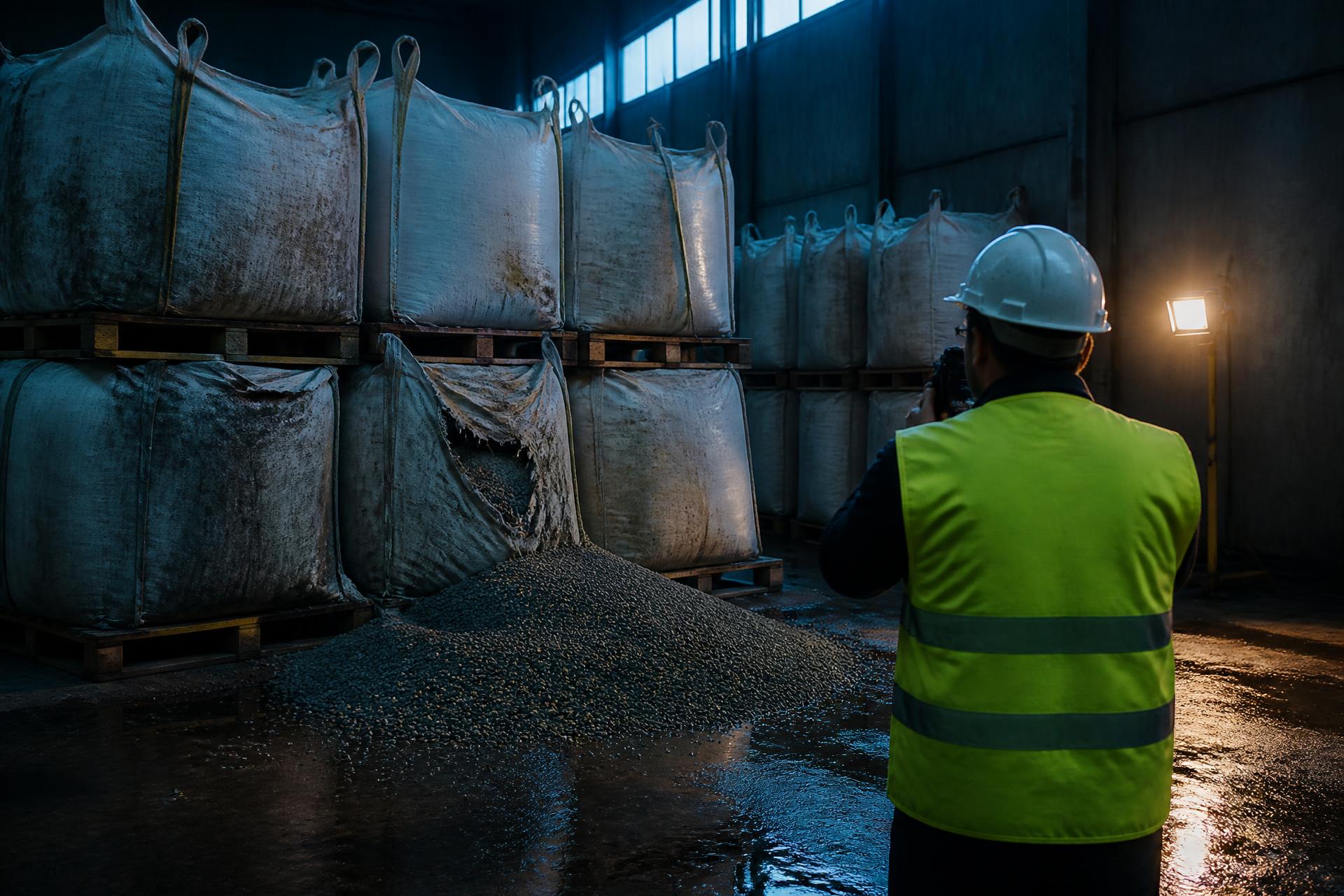
Water & moisture damage
Seawater or rainwater ingress, condensation and ship's sweat affecting bagged, bulk or palletised cargo. Segregation of sound and affected fractions often determines what value remains.
Damaged cargo · Worldwide
Pommer & Partners purchases damaged cargo as principal and arranges remarketing, recovery, recycling or compliant disposal where direct purchase is not the right route.
Definition
Damaged cargo is cargo whose physical condition, packaging or quality has been impaired during carriage, handling or storage, so that it no longer meets the original contract, buyer requirement or intended use.
Damage does not automatically destroy value. A consignment can often be graded, segregated, downgraded, reprocessed or placed with a buyer whose specification tolerates the documented condition.
What matters commercially is evidence: survey findings, laboratory results, photographs and a clear statement of quantity, packing and location. On that basis Pommer & Partners can quote as buyer, or organise a salvage sale, recovery or disposal route.
Damage patterns
Seawater or rainwater ingress, condensation and ship's sweat affecting bagged, bulk or palletised cargo. Segregation of sound and affected fractions often determines what value remains.
Contact with previous cargo residues, hold coatings, fuel, chemicals, insects or foreign matter. Laboratory evidence decides whether a food, feed or purely industrial route is possible.
Reefer breakdown, power interruption, heat exposure or freezing. Condition frequently varies pallet by pallet, so grading matters more than headline figures.
Crushed, torn or burst packaging, collapsed pallets, stevedore damage, dents and deformation on machinery and consumer products.
Cargo affected directly by fire or indirectly by smoke, soot and extinguishing water — often recoverable in part after inspection.
Product sound but packaging, labels, date coding or brand presentation no longer acceptable to the original buyer.
Problem → solution
Not every cargo can be recovered or sold. These are the routes we test, in the order in which they are normally examined.
The route chosen depends on condition, documentation, customs and sanctions position, and local law.
Feed or food use can never be assumed; it depends on analysis results and applicable regulation.
One case. One contact. Multiple solutions.
Clients do not need several different companies. Pommer & Partners can manage the complete process from initial cargo assessment through purchase, remarketing, recovery or final disposal.
Principal Buyer
We purchase distressed, damaged, rejected, off-specification, abandoned or otherwise problematic cargo for our own account — allowing cargo interests to close a file quickly and with commercial certainty.
Salvage & Remarketing
Where direct purchase is not commercially or geographically appropriate, we organise and manage the sale through our international network of buyers, traders, processors and end users.
Recovery Coordinator
If cargo no longer has a commercially viable market, we organise recycling, recovery, alternative industrial use, destruction or legally compliant disposal.
Depending on the cargo, jurisdiction and commercial circumstances, Pommer & Partners may purchase cargo as principal or provide remarketing, recovery, recycling or disposal coordination services. Where we buy, we act as a party to the transaction and not as an independent adviser or valuer.
How we work
Recover value. Reduce exposure. Release the asset.
A disciplined framework adapted to the commercial and regulatory circumstances of each file.
Cargo details, location, condition, photographs, survey reports and available analyses are received.
Condition, title, customs status, applicable regulation and realistic alternative uses are assessed.
Direct purchase, salvage sale, remarketing, recovery, recycling or disposal is selected according to the case.
The agreed transaction or recovery route is coordinated with the relevant parties.
Final documents, disposal or recovery evidence and the commercial outcome are reported.
Damaged cargo questions
Pommer & Partners buys damaged cargo after shipping incidents such as water ingress, fire, heavy weather, reefer failure or handling damage, either as principal or through a managed salvage sale. Other buyers include processors, industrial users and traders in downgraded grades, depending on what the survey and laboratory evidence permit.
Often yes, but only to uses the evidence supports. Sound fractions can frequently be segregated and sold normally, while affected portions may suit a downgraded, technical or industrial application. Contaminated cargo needs laboratory confirmation of the contaminant and its levels before any food, feed or industrial route can be considered under the applicable rules.
Salvage value is assessed from the extent and type of damage, the proportion of sound cargo, laboratory results, packaging condition, location, customs status and the markets realistically available. Storage, handling, transport and removal costs are then deducted to arrive at a net figure. Where we are the buyer, our figure is a commercial bid, not an independent valuation.
FAQ
Trust & compliance
Transactions and services are subject to verification and applicable regulation, including:
Purchases and sales require evidence of ownership and authority to sell, or the written authority of the insurer or party entitled to dispose of the cargo. Recovery, recycling and disposal routes depend on waste classification and on applicable environmental, transport and customs rules in the countries involved. Potential alternative use of food or agricultural cargo, including animal-feed applications, depends on cargo condition, laboratory results and applicable food and feed legislation, and is only pursued where the competent authorities and the relevant rules allow it.
Insurers and claims professionals will also find our approach to a damaged cargo salvage sale.
Related
We buy damaged, rejected and abandoned cargo as principal, AS IS, WHERE IS.
How cargo recovery companies, consultants and salvage buyers differ.
Buyers & recovery specialists worldwide.
Worldwide buyers of abandoned, unclaimed and stranded cargo.
Solutions for cargo inside abandoned and unclaimed containers.
Shipments never collected or claimed by the consignee.
Consignments refused on arrival by receivers or authorities.
Salvage sales and cargo recovery at sea and in port.
Solutions for rejected and off-specification consignments.
Distressed grain, feed and vegetable oils.
Damaged, rejected and off-spec agricultural commodity salvage.
Grain, corn and maize cargo damaged or rejected at destination.
Cargo recovery across the Red Sea, Gulf and East Africa.
International salvage sales and buyer placement.
Material and energy recovery routes.
When no commercial market remains.
How cargo cases are structured and resolved.
Submit cargo details
Send us the cargo details, location, quantity, condition and available survey information for an initial assessment.
contact@pommerpartners.com