Corn / Maize
Bulk and containerised parcels affected by moisture, self-heating, caking or mycotoxin findings.
Distressed cargo · Insurance salvage · Cargo recovery
Pommer & Partners develops international solutions for damaged, rejected, off-specification and otherwise distressed agricultural cargo.
Agricultural cargo deteriorates on a clock. Once a parcel is wet, heated, contaminated or refused at destination, the commercial question changes: what lawful use does the cargo still have, and which route produces the best net result for the parties carrying the exposure?
Depending on the individual case, Pommer & Partners can acquire cargo directly, introduce suitable buyers, organise international remarketing, or develop an alternative recovery or disposal solution. The role is chosen to fit the case, not the other way round.
Each parcel is assessed individually against its condition, laboratory and survey results, location, regulatory restrictions, logistics and the markets realistically available to it. Food-chain and feed cargo is only placed where the intended use is permitted in the receiving market.
The commercial objective: maximise recoverable value while reducing storage, demurrage, disposal and claims exposure.
Closely related work is described under damaged grain cargo and Red Sea cargo recovery.
Typical situations
Commodities
Grain and feed cargoes are assessed on condition and analysis rather than on the label they arrived with.
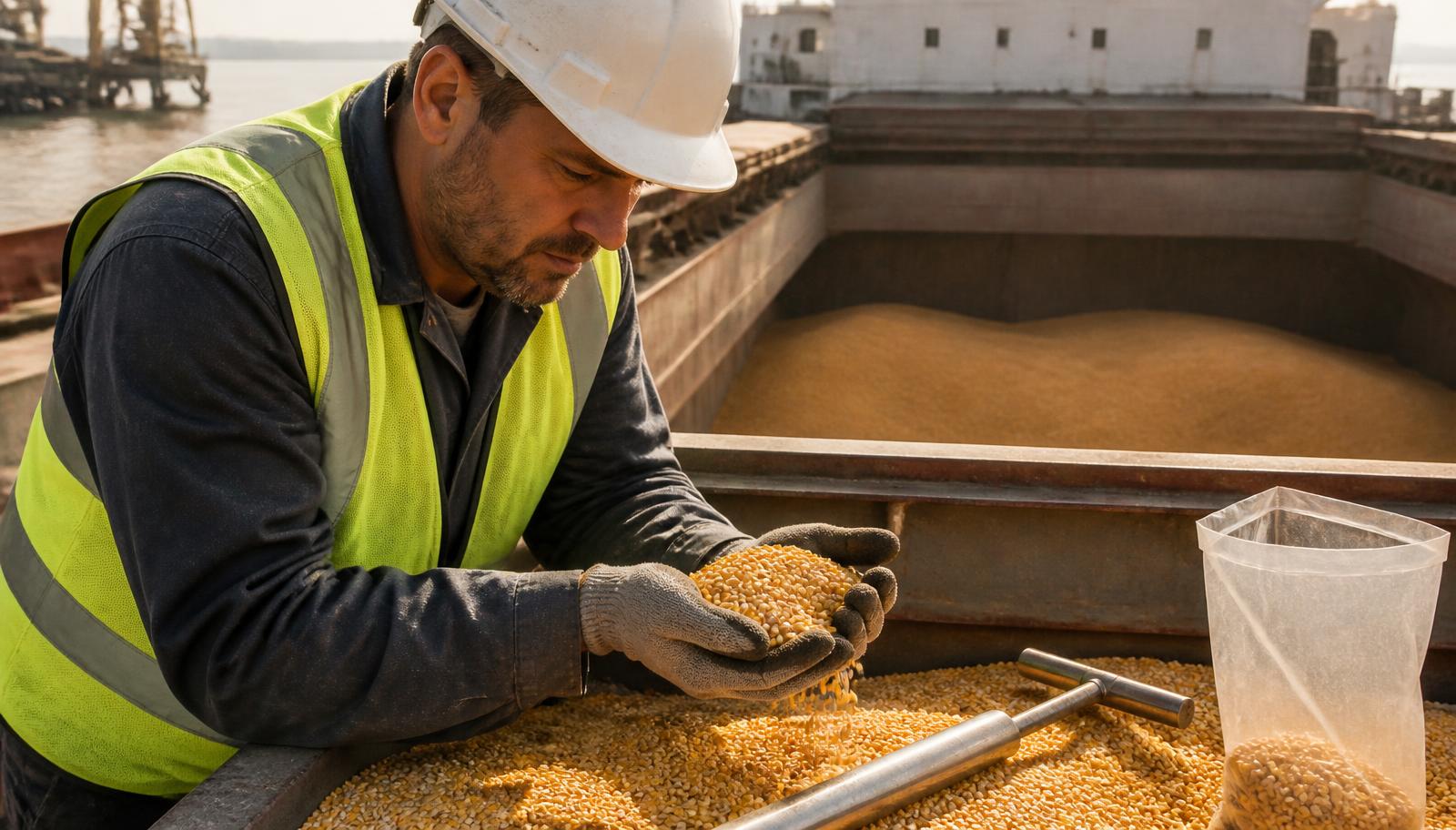
Bulk and containerised parcels affected by moisture, self-heating, caking or mycotoxin findings.
Milling and feed qualities affected by wetting, sprouting, insects or specification deviation.
Malting and feed parcels downgraded after moisture ingress, odour or germination loss.
Water-damaged bags, discoloured or odour-affected parcels and consignments refused on import.
Beans, meal and expellers affected by heating, moisture or analytical deviation.
Rapeseed, sunflower and similar parcels with elevated free fatty acids or contamination.
Beans, peas, lentils and chickpeas affected by wetting, insects or foreign matter.
Compound feed, pellets and blends refused by feed mills, receivers or authorities.
By-products, brans, pulps, meals and premixes outside contractual specification.
Further agricultural parcels assessed case by case against condition and regulation.
Agricultural recovery decisions
First establish why the shipment was rejected and what the rejection actually prevents. A receiver's contractual refusal, a grade downgrade, physical damage and an authority's import restriction are different problems. Pommer & Partners reviews the evidence, title and authority to sell, customs and carrier position, and available time before proposing a principal purchase or another recovery route. Rejection alone neither establishes zero value nor transfers ownership or permits removal.
Receiver refusal and grain remaining on board a vesselBy matching the parcel's verified condition to an identifiable buyer and a permitted use, then testing whether the transaction can actually be completed. Pommer & Partners evaluates local, regional and international outlets against destination acceptance, freight, handling, treatment and timing. A contractual specification failure may allow a different grade or market, but safety or regulatory restrictions cannot be bypassed by changing the buyer. Re-export permission and receiving-country acceptance must be established for the individual route.
Compare achievable net proceeds rather than headline bids, deducting the costs of each route and distinguishing incurred costs from genuinely avoidable future exposure. Title, risk, payment, delivery and release milestones are agreed separately; a sale alone does not release carrier or terminal obligations.
How alternative buyers and destinations are evaluatedIndustrial recovery may be preferable when no acceptable resale outlet is available, but a technically suitable and legally permitted process offers a better achievable net outcome than disposal. Pommer & Partners evaluates processor acceptance, analysis, treatment and transport costs, permits and timing. Neither rejection nor loss of resale value automatically makes cargo waste; classification follows applicable law. Product processing, waste material recycling, other recovery including energy recovery, and disposal are distinct routes.
A proposed technical or energy outlet must be supported by the actual cargo condition and regulatory requirements. It is not a default destination for unsafe food or feed, and no industrial use is guaranteed.
Product, waste, recycling and other recovery distinctionsBuyer network
A single local offer does not automatically represent the best net result. Where circumstances allow, several commercial routes are compared before a recommendation is made.
A buyer at or near the port of discharge, where condition and regulation permit.
Processors and traders in neighbouring markets with different quality tolerances.
Re-export where the destination permits the intended use of the cargo.
Technical, industrial or non-food applications where the deviation is irrelevant.
Blending, cleaning, drying, treatment or energy recovery by a suitable plant.
Compliant destruction as a last resort once no commercial route remains.
The comparison is not limited to the headline price. Each option is weighed against the full cost and risk picture:
Who we work with
Agricultural cargo cases are usually driven by more than one interested party. Pommer & Partners can be brought in by, or work alongside, the following:
How we work
Recover value. Reduce exposure. Release the asset.
A disciplined framework adapted to the commercial and regulatory circumstances of each file.
Cargo details, location, condition, photographs, survey reports and available analyses are received.
Condition, title, customs status, applicable regulation and realistic alternative uses are assessed.
Direct purchase, salvage sale, remarketing, recovery, recycling or disposal is selected according to the case.
The agreed transaction or recovery route is coordinated with the relevant parties.
Final documents, disposal or recovery evidence and the commercial outcome are reported.
Trust & compliance
Transactions and services are subject to verification and applicable regulation, including:
Purchases and sales require evidence of ownership and authority to sell, or the written authority of the insurer or party entitled to dispose of the cargo. Recovery, recycling and disposal routes depend on waste classification and on applicable environmental, transport and customs rules in the countries involved. Potential alternative use of food or agricultural cargo, including animal-feed applications, depends on cargo condition, laboratory results and applicable food and feed legislation, and is only pursued where the competent authorities and the relevant rules allow it.
Related specialist pages
Bulk grain and corn or maize damaged or refused on arrival at destination.
Cargo situations across the Red Sea, Arabian Peninsula and East Africa.
How rejected and off-specification consignments are assessed for alternative use.
Structured remarketing and salvage sales through an international buyer network.
Related
We buy damaged, rejected and abandoned cargo as principal, AS IS, WHERE IS.
How cargo recovery companies, consultants and salvage buyers differ.
Buyers & recovery specialists worldwide.
Worldwide buyers of abandoned, unclaimed and stranded cargo.
Solutions for cargo inside abandoned and unclaimed containers.
Shipments never collected or claimed by the consignee.
Consignments refused on arrival by receivers or authorities.
Salvage sales and cargo recovery at sea and in port.
Solutions for rejected and off-specification consignments.
Wet, contaminated and heat-affected consignments.
Distressed grain, feed and vegetable oils.
Damaged, rejected and off-spec agricultural commodity salvage.
Grain, corn and maize cargo damaged or rejected at destination.
Cargo recovery across the Red Sea, Gulf and East Africa.
International salvage sales and buyer placement.
Material and energy recovery routes.
When no commercial market remains.
How cargo cases are structured and resolved.
Contact
Send us the available cargo details, location, quantity, survey information and photographs. We will assess possible recovery and remarketing options.
contact@pommerpartners.com