Antwerp-Bruges · Belgium · European industrial cluster
Distressed Cargo Buyer &
Cargo Recovery in Antwerp-Bruges
Commercial solutions for distressed, damaged, rejected, off-specification and otherwise problematic cargo in Antwerp-Bruges and the wider Belgian and European market.
Recover value. Reduce exposure. Release the asset.
Pommer & Partners is an international distressed cargo buyer and cargo recovery specialist. Where a cargo in Antwerp-Bruges can no longer continue into the market it was produced for, the commercial question is rarely whether it is worthless — it is which of the remaining routes returns the most, net of the cost of getting there.
Depending on the cargo, the legal position and the commercial circumstances, we can evaluate purchase as principal, a salvage sale, international remarketing, an alternative industrial application, reprocessing, recovery, recycling or a compliant disposal route.
Why Antwerp-Bruges matters
An integrated port sitting inside an industrial ecosystem.
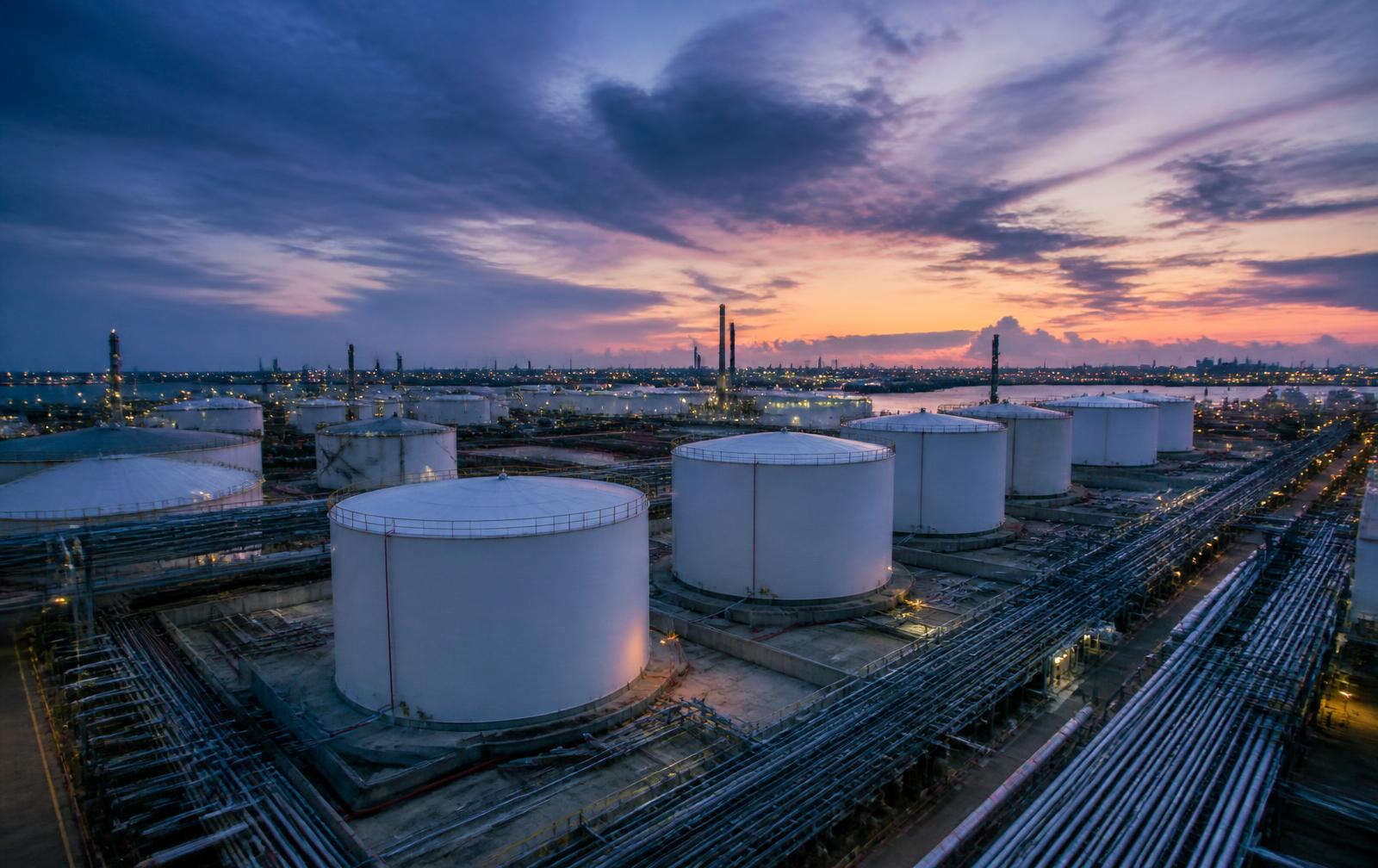
Antwerp-Bruges is one of Europe's major integrated ports and industrial logistics clusters. Unlike a port whose role is essentially transhipment, a substantial part of what arrives here is destined for processing, blending, storage, conversion or European distribution rather than onward sea transport.
That matters commercially for distressed cargo. Chemical processors, tank storage operators, converters, steel service centres, packers, warehouse keepers, recyclers and distribution operators sit within short road, rail, barge and pipeline distance of the quay, and the hinterland reaches deep into Belgium, the Netherlands, France and Germany.
The practical consequence is that a parcel which has lost its original buyer has not necessarily lost its market. Alternative routes are frequently available without long-distance re-shipment consuming the remaining value — provided the cargo's condition, classification and legal position permit them.
Pommer & Partners International Trading Limited is registered in Ireland. We do not own or operate a Belgian office, terminal, warehouse, processing facility, recycling facility or disposal facility. Antwerp-Bruges is a service area; local execution is arranged with appropriately authorised third-party providers.
Particularly relevant to
- Chemicals and petrochemicals
- Containers
- Breakbulk
- Steel
- Project cargo
- Food and agricultural commodities
- Liquid bulk
- Dry bulk
- Industrial raw materials
- Warehousing and European distribution
Primary specialisation · chemicals
Off-Spec & Distressed Chemical Cargo in Antwerp
Chemical and petrochemical cargo is the subject on which Antwerp-Bruges cases most often turn. Industrial material becomes commercially distressed for reasons that have nothing to do with whether the substance is intrinsically usable — a deviation of a fraction of a percent, a colour shift, a moisture reading or a documentation discrepancy can end a contract while leaving a product that another processor would accept without hesitation.
Our work is to identify the receiver whose tolerance matches the material as it actually is, and to weigh that against reprocessing, recovery, recycling and disposal alternatives.
Chemical cargo requires product-specific evaluation. No route can be assumed generically.
Nothing on this page implies that hazardous material can be freely moved, sold or disposed of. Any handling remains subject to product classification, safety, transport, environmental and waste regulation, and to the use of appropriately authorised facilities and carriers.
Possible commercial routes
Why chemical cargo becomes distressed
- Specification deviation
- Contamination
- Colour deviation
- Moisture
- Packaging damage
- Storage problems
- Documentation discrepancies
- Rejected delivery
- Cancelled contract
- Quality dispute
- Transport damage
- Product degradation
Information that matters
- Product identity
- SDS / Safety Data Sheet
- Specification
- Certificate of Analysis
- Laboratory results
- Quantity
- Packaging
- Location
- Hazard classification
- Reason for rejection
- Photos
- Survey report
Industrial raw materials
Distressed Polymers & Plastic Raw Materials
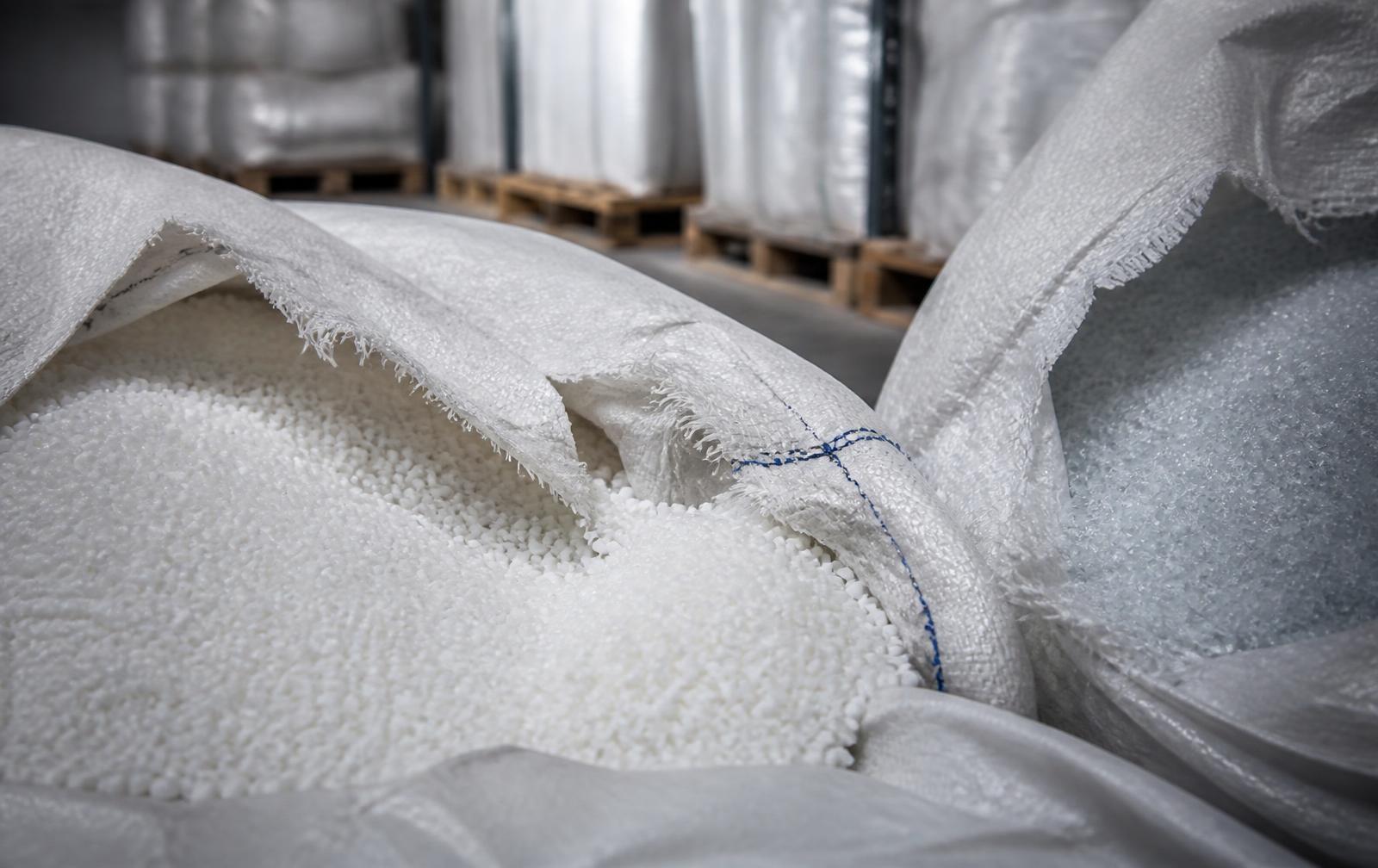
Polymers move through Antwerp-Bruges in very large volumes, in granule form, in big bags, in octabins and in containers, and they are unusually sensitive to handling. A torn bag, a wet pallet, a colour deviation or a batch that drifts outside the converter's melt-flow window can turn a first-grade parcel into an unsellable one within a single movement.
Grade tolerance varies enormously between converters, and secondary and recycling outlets apply their own acceptance criteria. We evaluate alternative industrial buyers, secondary markets, recycling routes and other commercial recovery solutions against the documented condition of the specific lot.
Materials
- PE
- PP
- PET
- PVC
- Polymer granules
- Plastic compounds
- Recycled polymers
- Off-specification plastic raw materials
- Contaminated or mixed polymer lots
Typical issues
- Off-specification material
- Colour deviation
- Contamination
- Moisture
- Packaging damage
- Torn big bags
- Water exposure
- Contract rejection
- Surplus inventory
Steel, metals & breakbulk
Distressed Steel, Metals & Breakbulk Cargo
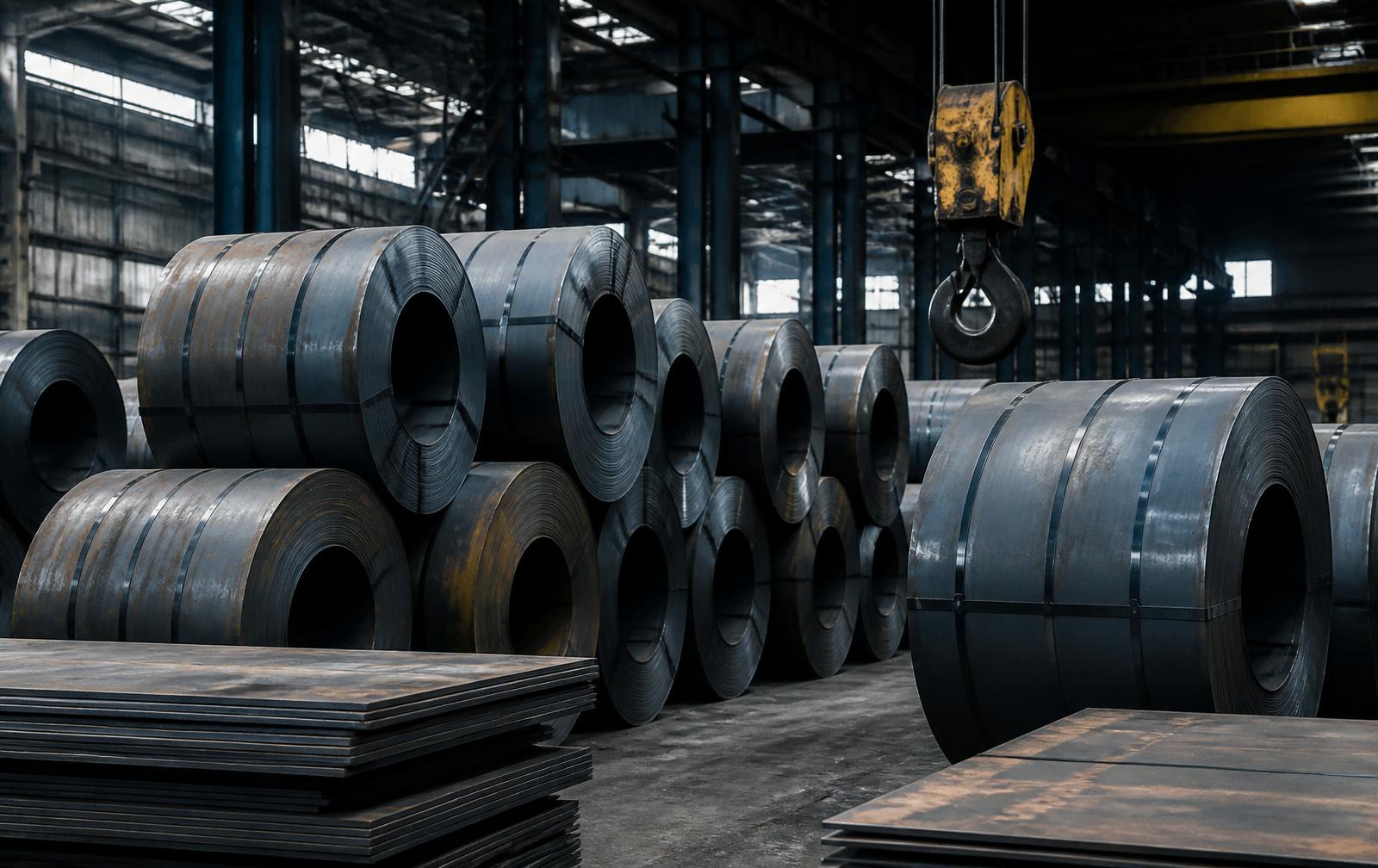
Antwerp-Bruges retains a deep breakbulk and steel-handling tradition alongside its container and chemical activity, with warehouse capacity, service centres and project-cargo capability in the immediate hinterland. Steel and breakbulk therefore behave differently here than in a container-dominated port: cargo can be landed, stored, inspected, sorted and re-offered.
Damage assessment on steel is rarely binary. A coil with edge rust and a coil with through-thickness pitting are different commercial cases, and a surveyor's condition report usually determines which of them a service centre will still consider.
We do not promise a recovery route before inspection.
Potential routes
Value after damage depends on
- Extent of physical damage
- Remaining specification
- End-use possibilities
- Reconditioning costs
- Scrap / recycling value
- Logistics
Cargo covered
- Steel coils
- Steel plates
- Pipes
- Profiles
- Non-ferrous metals
- Industrial equipment
- Machinery
- Project cargo
- Other breakbulk commodities
Typical problems
- Seawater exposure
- Freshwater exposure
- Rust
- Packaging damage
- Handling damage
- Transport damage
- Specification disputes
- Rejected delivery
- Storage deterioration
Containers & packaged cargo
Distressed Container Cargo in Antwerp-Bruges
Container cases here are usually cost-driven. Detention, demurrage and storage accumulate while the underlying questions — who owns the cargo, who is authorised to sell it, what customs status it holds and what it is still worth — remain open.
We work the commercial hierarchy in order:
- Can it still be sold?
- If not — can it be remarketed?
- If not — can it be recovered or recycled?
- If not — what is the most commercially efficient compliant disposal route?
Situations covered
- Water ingress
- Container damage
- Reefer malfunction
- Temperature excursions
- Damaged packaging
- Rejected imports
- Customs problems
- Cancelled orders
- Abandoned containers
- Unclaimed cargo
- Storage-cost pressure
- Cargo requiring urgent removal
Food, feed & agricultural cargo
Distressed Food, Feed & Agricultural Cargo
Food, feed and agricultural cargo also arrives in Antwerp-Bruges, frequently in packaged or containerised form, and problems are often discovered late — on de-stuffing, on inspection or at the receiving plant.
Food and feed suitability cannot be determined purely commercially.
Any alternative food or feed application depends on the cargo's documented condition, laboratory analysis, the applicable EU and Belgian regulations, traceability, contamination findings and the relevant approvals where these are required. Rejected food does not automatically become feed.
Cargo covered
- Grain
- Feed ingredients
- Vegetable oils
- Food ingredients
- Packaged food
- Agricultural commodities
- Agricultural by-products
Typical problems
- Water damage
- Temperature deviation
- Specification failure
- Contamination
- Packaging damage
- Rejection
- Quality deterioration
Any route depends on
- Cargo condition
- Laboratory analysis
- EU / Belgian regulation
- Traceability
- Contamination
- Relevant approvals where required
Liquid bulk
Distressed Liquid Bulk & Industrial Liquids
Liquid parcels are commercially unforgiving: a single contaminated line, a previous cargo residue or a partial mixing event can affect an entire tank, and the parcel cannot be sorted the way a packaged cargo can.
For this reason, representative sampling and laboratory analysis are particularly important. They determine not only price but whether a route exists at all.
We do not imply universal handling capability for hazardous substances. Regulated liquids remain subject to classification, transport and environmental requirements and to appropriately authorised facilities.
Examples
- Vegetable oils
- Industrial oils
- Chemical intermediates
- Certain biofuel-related products
- Other liquid commodities
Typical problems
- Contamination
- Specification deviation
- Tank contamination
- Mixing
- Quality deterioration
- Rejected delivery
Industrial recovery
When the Original Market Is Gone
A distressed cargo does not automatically become waste simply because its original buyer rejects it. The correct commercial sequence works downwards, and each step is only reached when the one above it is closed.
Original market
Can the cargo still fulfil its intended use, possibly with a discount, a reduced grade or a revised delivery arrangement?
Secondary market
Can another buyer take the cargo as-is, in its documented condition, without further treatment?
Alternative use
Can another industry use the material, even where it no longer serves the sector it was produced for?
Reprocessing
Can treatment, reprocessing, regrading, re-packing or blending restore commercial value?
Recycling / material recovery
Can material value still be recovered where the product itself is finished as a product?
Disposal
Only where no commercially and legally viable recovery route remains.
Disposal should be the final option, not the first assumption.
Time exposure
Cargo Problem Creating Vessel or Terminal Exposure?
When damaged or rejected cargo cannot move as planned, cost accumulates independently of the cargo's value — and often faster than it.
Maximising the cargo's nominal selling price may not maximise the overall recovery.
Pommer & Partners evaluates the total commercial outcome: what the cargo realises, less what the delay, handling, storage and disposal exposure will cost before it is released.
Where cost accumulates
- Vessel delay
- Demurrage
- Storage
- Container detention
- Terminal charges
- Survey costs
- Handling
- Additional transport
- Disposal exposure
Insurance salvage
Insurance Salvage & Cargo Recovery
Pommer & Partners can evaluate distressed cargo arising from insured losses and marine claims in Antwerp-Bruges, working with insurers, P&I Clubs, surveyors, average adjusters, shipowners and cargo interests.
Because we may also purchase the cargo, we do not act as an independent valuer. Where independent valuation or surveying is required, it should be carried out by an appropriately independent third party.
Information required
Cargo Currently in Antwerp-Bruges?
Send what you have. A case can usually be assessed on partial information, and missing items can follow.
Please include
- Commodity / product
- Quantity
- Exact location
- Packaging
- Cargo condition
- Reason for rejection / damage
- Survey report
- Laboratory analysis / COA
- SDS for chemicals where relevant
- Photographs
- Time constraint
- Commercial expectation
- Title / authority information where relevant
How we handle the case
From case receipt to execution.
Case received
We take the basic commercial picture:
- Product
- Quantity
- Location
- Packaging
- Cargo problem
- Time constraint
Documentation review
We review, where available:
- Specification and Certificate of Analysis
- Safety Data Sheet for chemical products
- Survey report
- Laboratory analysis
- Photographs
- Cargo and customs documents
- Information concerning ownership / title
Commercial & regulatory assessment
We evaluate:
- Remaining commercial value
- Alternative industrial buyers
- Reprocessing and recycling routes
- Hazard classification and transport requirements
- Waste classification where relevant
- Logistics and storage exposure
- Time pressure
Solution
Depending on the case:
Execution
We coordinate the selected route with the cargo interests and, where required, appropriately authorised local service providers.
Antwerp-Bruges questions
Frequently asked questions.
Who buys distressed cargo in Antwerp?
Distressed cargo in Antwerp is generally handled by specialist distressed-cargo buyers rather than by the ordinary trade. Pommer & Partners is one such specialist and can evaluate direct purchase as well as alternative recovery routes, depending on the product, its condition and the legal position.
Who buys off-spec chemicals in Antwerp?
Potential buyers depend heavily on chemical identity, the nature of the specification deviation, safety classification and possible alternative industrial applications. Pommer & Partners can evaluate potential commercial recovery routes on a product-specific basis. For chemicals, resins and polymers at Antwerp-Bruges, supply the safety data sheet, actual analysis, batch identity and the deviation from specification. Pommer & Partners compares an acceptable industrial product outlet with permitted treatment routes and their net costs. Off-specification product is not automatically waste, while material with value may still be waste under applicable law. Product reprocessing, waste material recycling, energy recovery and disposal must not be treated as interchangeable. Product and waste recovery distinctions.
Can Pommer & Partners purchase cargo directly?
Yes. Depending on the case, Pommer & Partners can act as principal buyer, which allows cargo interests to close a file with commercial certainty.
Can damaged steel still be sold?
Often potentially, depending on corrosion, physical damage, remaining specification and possible industrial applications. Inspection may be required before any route can be confirmed.
What happens to rejected container cargo in Antwerp-Bruges?
Potential routes include alternative sale, remarketing, recovery, recycling or compliant disposal, depending on cargo condition, title and customs status.
Can rejected food be sold as animal feed?
Not automatically. This depends on cargo condition, laboratory analysis and the applicable food and feed regulations.
Can Pommer & Partners arrange disposal in Belgium?
Pommer & Partners can coordinate appropriate disposal solutions where required, subject to waste classification, environmental requirements and the use of appropriately authorised facilities.
Can you handle urgent marine claims?
Urgent cargo cases can be evaluated on the basis of the available documentation, the cargo location, its condition and the commercial constraints of the case.
Does Pommer & Partners have an office in Antwerp?
No. Pommer & Partners International Trading Limited is registered in Ireland and handles Belgian and wider European cases through its own direct commercial activity and, where required, appropriately authorised local service providers. Antwerp-Bruges is a service area, not a company location.
Trust & compliance
Commercial, but always within the rules.
Transactions and services are subject to verification and applicable regulation, including:
- Ownership and title verification
- Applicable customs requirements
- Sanctions and compliance checks
- Environmental and waste regulations
- Local laws
- Cargo-specific regulatory requirements
Purchases and sales require evidence of ownership and authority to sell, or the written authority of the insurer or party entitled to dispose of the cargo. Recovery, recycling and disposal routes depend on waste classification and on applicable environmental, transport and customs rules in the countries involved. Potential alternative use of food or agricultural cargo, including animal-feed applications, depends on cargo condition, laboratory results and applicable food and feed legislation, and is only pursued where the competent authorities and the relevant rules allow it.
Pommer & Partners acts as buyer, principal and recovery specialist for distressed cargo at this port and worldwide. See International cargo recovery and Worldwide distressed cargo buyers.
Related
Distressed Cargo Buyer
We buy damaged, rejected and abandoned cargo as principal, AS IS, WHERE IS.
Cargo Recovery Companies
How cargo recovery companies, consultants and salvage buyers differ.
Distressed Cargo
Buyers & recovery specialists worldwide.
Abandoned Cargo Buyers
Worldwide buyers of abandoned, unclaimed and stranded cargo.
Abandoned Container Cargo
Solutions for cargo inside abandoned and unclaimed containers.
Unclaimed Cargo
Shipments never collected or claimed by the consignee.
Refused Cargo Buyers
Consignments refused on arrival by receivers or authorities.
Marine Cargo Salvage
Salvage sales and cargo recovery at sea and in port.
Rejected & Off-Spec Cargo
Solutions for rejected and off-specification consignments.
Damaged Cargo Buyers
Wet, contaminated and heat-affected consignments.
Agricultural Commodities
Distressed grain, feed and vegetable oils.
Distressed Agricultural Cargo
Damaged, rejected and off-spec agricultural commodity salvage.
Damaged Grain & Corn Salvage
Grain, corn and maize cargo damaged or rejected at destination.
Red Sea & Middle East Recovery
Cargo recovery across the Red Sea, Gulf and East Africa.
Cargo Remarketing
International salvage sales and buyer placement.
Cargo Recovery & Recycling
Material and energy recovery routes.
Cargo Disposal & Destruction
When no commercial market remains.
Case Studies
How cargo cases are structured and resolved.
Submit cargo details
Distressed cargo in Antwerp-Bruges? Send us the case.
Send us the cargo details, location, quantity, condition and available survey information for an initial assessment.
contact@pommerpartners.com