Ain Sokhna Port · Egyptian Red Sea · Suez region

Distressed Cargo Buyer & Cargo Recovery
at Ain Sokhna Port

Commercial solutions for distressed, damaged, rejected, off-specification and otherwise problematic cargo at Ain Sokhna Port and across the Egyptian Red Sea and Suez region.

Pommer & Partners provides commercial solutions for distressed, damaged, rejected, off-specification and otherwise problematic cargo at Ain Sokhna Port and across the Egyptian Red Sea and Suez region.

Pommer & Partners is an international distressed cargo buyer and cargo recovery specialist. Depending on cargo condition, legal position, regulatory status and commercial circumstances, we can evaluate:

  • Direct purchase as principal
  • Salvage sale
  • Alternative buyer placement
  • International remarketing
  • Alternative commercial use
  • Industrial recovery
  • Energy recovery
  • Recycling
  • Compliant disposal

Recover value. Reduce exposure. Release the asset.

Pommer & Partners International Trading Limited is registered in Ireland. We do not operate an office, terminal, warehouse, processing facility or subsidiary at Ain Sokhna, and we do not control port or customs operations.

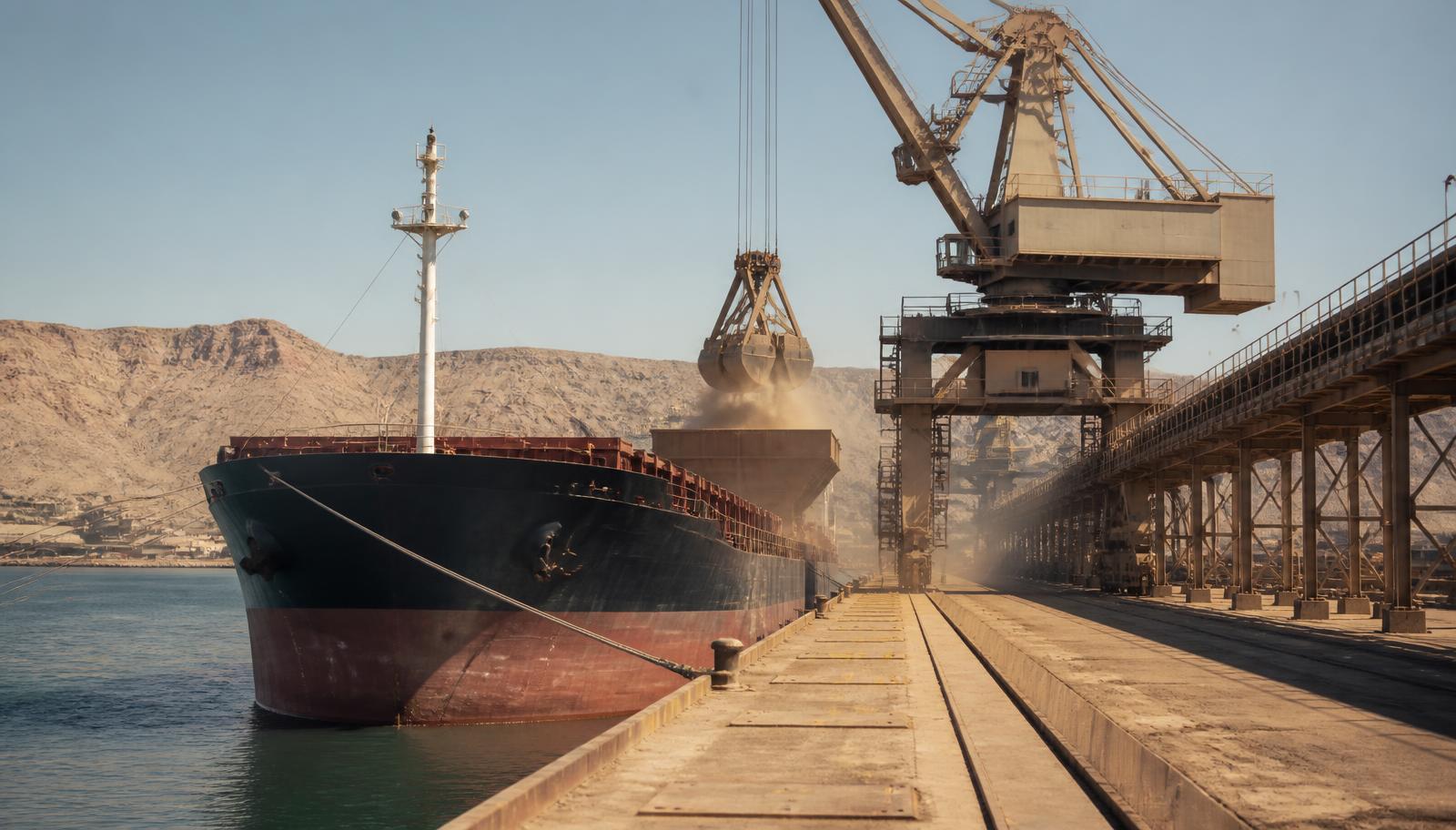
Unbranded bulk carrier discharging dry bulk by grab crane at an arid Red Sea industrial berth

Illustrative image · no third-party branding

Ain Sokhna & the Egyptian Red Sea

An Industrial Port, and Industrial Cargo Problems.

Ain Sokhna sits on the Egyptian Red Sea coast, close to the southern approach of the Suez corridor and within reach of the industrial and consumption centres inland. That combination gives the port a distinctly industrial cargo profile: material arriving to be used, processed or manufactured, rather than simply passing through.

For distressed cargo work, that matters. The cases we see here are typically about the physical condition and specification of a material — whether a bulk parcel, a chemical, a steel consignment or a piece of project equipment can still perform its intended industrial function, and if not, what other use it can be put to.

Cargo relevant to this page includes:

Dry bulk cargoAgricultural commoditiesIndustrial raw materialsChemicalsMineralsFertilisersSteel and metalsMachineryProject cargoContainersGeneral cargo

Pommer & Partners can evaluate distressed cargo at Ain Sokhna Port for direct purchase, remarketing, industrial recovery, recycling or compliant disposal.
Ain Sokhna focus

  1. 01Industrial & dry bulk cargo
  2. 02Agricultural commodities
  3. 03Steel, metals & project cargo
  4. 04Off-spec industrial materials
  5. 05Vessel & terminal delay
  6. 06Red Sea cargo recovery
  7. 07Container cargo

Port capabilities, terminal arrangements, customs and import procedures should be confirmed with the competent Egyptian port and customs authorities for the individual case. We do not publish cargo volumes or port statistics we cannot verify.

Primary specialisation

Distressed Dry Bulk Cargo at Ain Sokhna

Relevant cargo

  • Agricultural commodities
  • Grain
  • Feed ingredients
  • Fertilisers
  • Minerals
  • Industrial raw materials
  • Other dry bulk commodities

Potential problems

  • Water ingress
  • Contamination
  • Mixing of parcels
  • Moisture
  • Specification deviation
  • Quality deterioration
  • Rejected delivery
  • Contract cancellation
  • Documentation problems
  • Commercial abandonment

Large bulk quantities rarely have a single obvious answer. A parcel may be partially sound and partially affected, may be split across holds or silos, and may face different regulatory treatment depending on the intended use. A recovery strategy therefore has to consider the entire commercial case — segregation, handling, storage, time and regulatory position — and not simply a price per tonne.

Industrial materials

Off-Spec Industrial Cargo

Material that fails its intended specification is not necessarily worthless — it is often simply in the wrong place, in the wrong grade, for the wrong buyer. Potential materials include:

  • Industrial raw materials
  • Chemicals
  • Polymers
  • Fertilisers
  • Minerals
  • Oils
  • Manufacturing inputs
  • Packaged industrial products

Reasons for commercial distress may include:

  • Specification deviation
  • Contamination
  • Quality dispute
  • Packaging damage
  • Transport damage
  • Rejected delivery
  • Cancelled transaction
  • Surplus inventory

Possible routes, subject to assessment:

Direct purchaseAlternative industrial buyerRemarketingReprocessingRecoveryRecyclingCompliant disposal

Product-specific assessment may require

  • SDS
  • COA
  • Specification
  • Laboratory analysis
  • Hazard classification
  • Survey report

Hazardous or regulated materials require classification and appropriately authorised handling before any route can be agreed.

Agricultural commodities

Distressed Agricultural Cargo at Ain Sokhna

Relevant cargo may include:

  • Maize / corn
  • Wheat
  • Barley
  • Grain
  • Feed commodities
  • Soy products
  • Agricultural by-products
  • Vegetable oils

Potential issues may include:

  • Moisture
  • Mycotoxins
  • Mould
  • Pest findings
  • Contamination
  • Specification failure
  • Rejected delivery
  • Commercial disputes

Pommer & Partners can evaluate alternative commercial markets and recovery routes for such cargo. Rejection from one market does not automatically qualify a cargo for another: any alternative food or feed use requires appropriate assessment against the applicable requirements. Deeper agricultural bulk and vessel-size grain content is covered on our Alexandria & El Dekheila page.

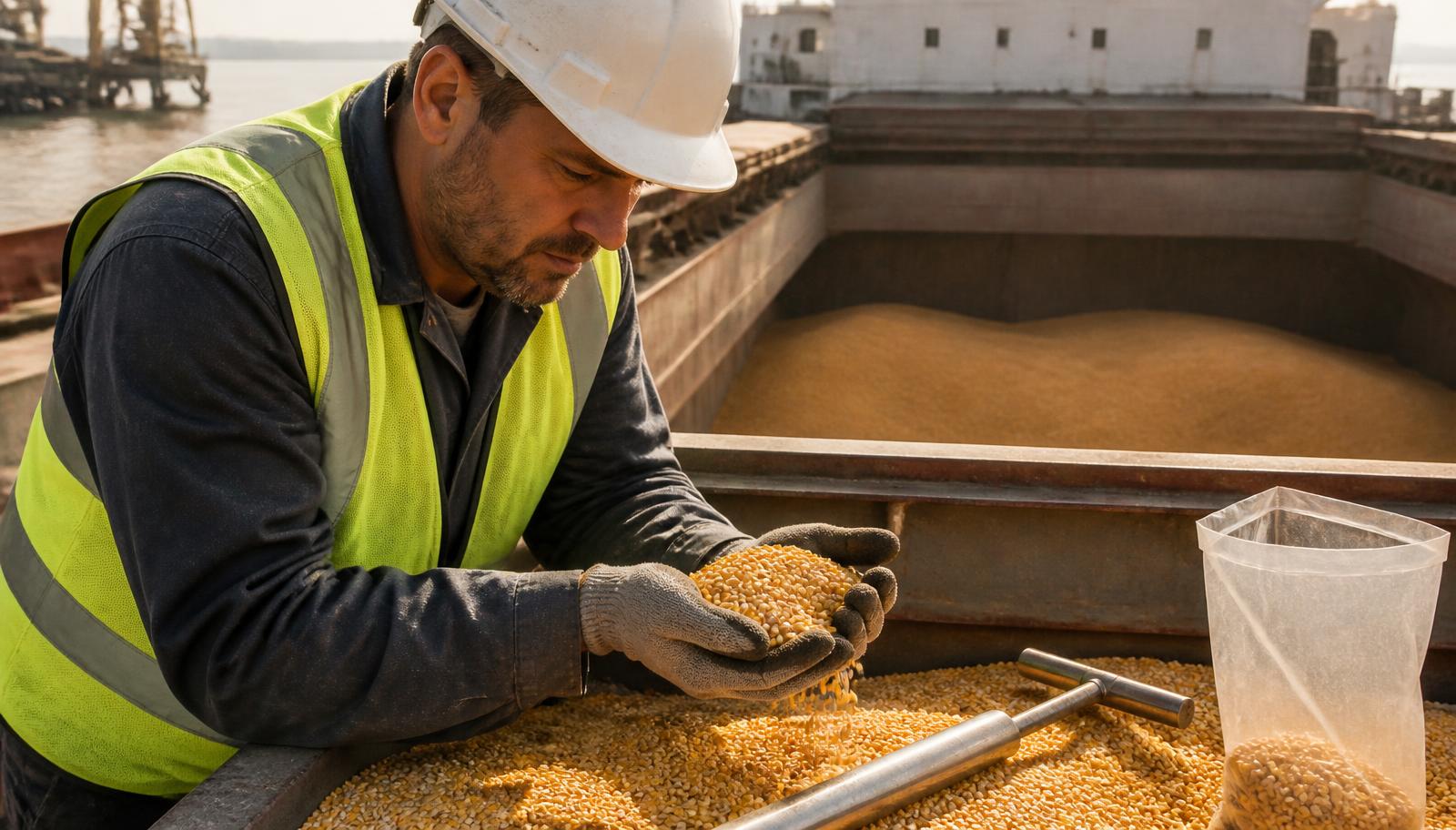
Surveyor taking a sample from a bulk agricultural cargo for laboratory analysis

Alternative use

Agricultural Cargo for Energy Recovery

Certain agricultural commodities that can no longer economically or legally remain in their original market may potentially be considered for industrial or energy-recovery applications.

Potential routes

  • Biogas
  • Bioenergy
  • Alternative industrial applications
  • Material recovery

Suitability depends on

  • Cargo composition
  • Contamination
  • Laboratory results
  • Regulatory classification
  • Environmental requirements
  • Logistics
  • Receiving-facility requirements
  • Commercial economics

No rejected cargo is suitable for biogas or energy recovery by default. Each parcel requires technical, regulatory and commercial assessment before any such route can be considered.

Steel, metals & project cargo

Damaged Steel, Metals & Project Cargo

Relevant cargo may include:

  • Steel coils
  • Steel plates
  • Pipes
  • Profiles
  • Non-ferrous metals
  • Machinery
  • Equipment
  • Project cargo
  • Industrial components

Potential damage may include:

  • Seawater exposure
  • Corrosion
  • Handling damage
  • Impact damage
  • Packaging damage
  • Storage deterioration

Potential recovery routes:

As-is saleAlternative industrial buyerReconditioningSecondary marketMaterial recoveryRecycling

Remaining value depends on the actual physical condition of the material and on the alternative industrial applications realistically available for it — not on its original contract value.

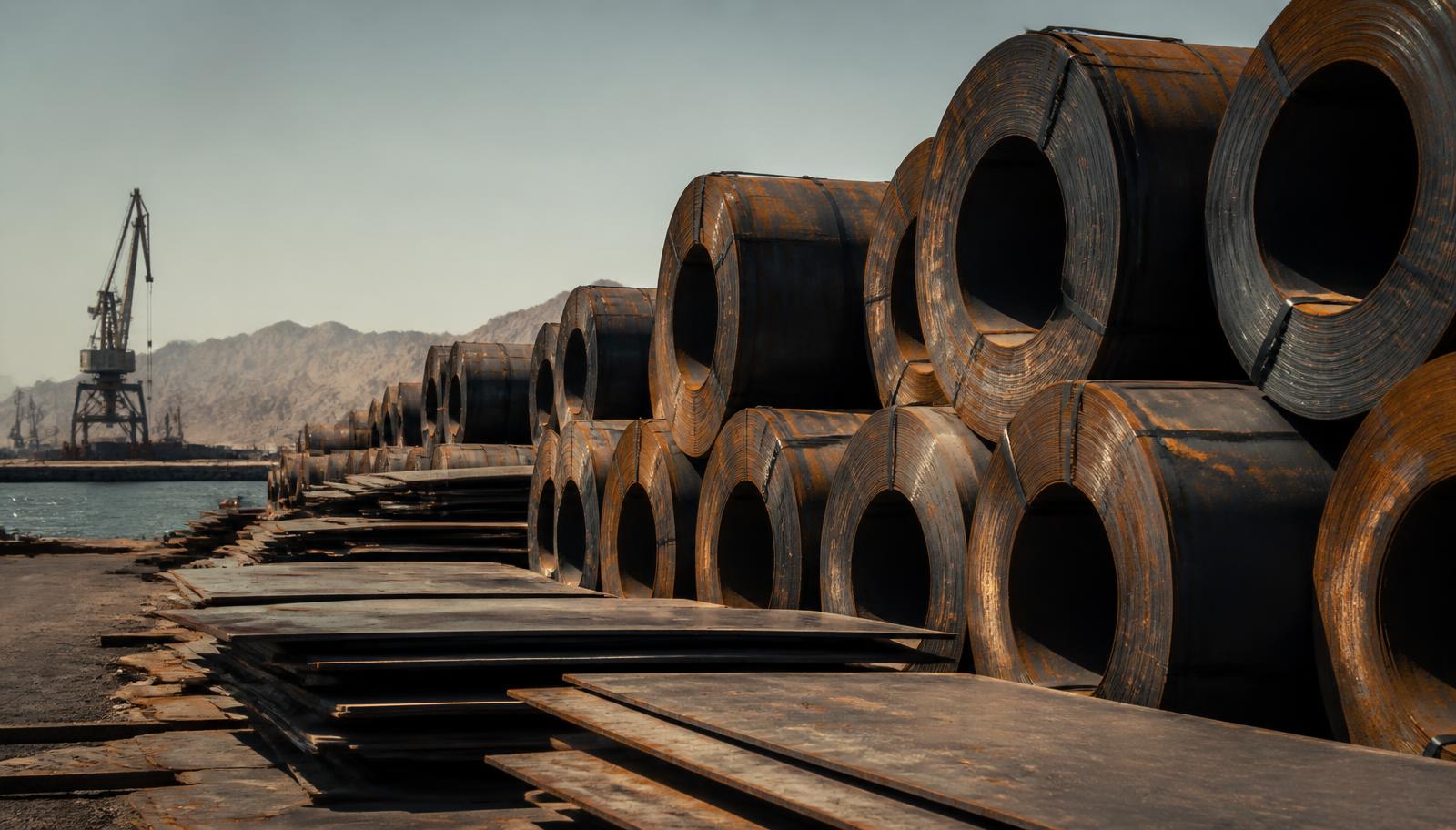
Corroded steel coils and plates stacked on a quayside in an arid Red Sea industrial port

Time exposure

Is Distressed Cargo Creating Vessel or Terminal Delay?

Potential exposure may include:

  • Vessel delay
  • Demurrage
  • Port charges
  • Storage
  • Handling
  • Survey costs
  • Sampling
  • Laboratory testing
  • Additional logistics
  • Cargo deterioration
  • Disposal costs

Maximising cargo price and maximising total recovery are not always the same objective.

Pommer & Partners evaluates the overall commercial result — remaining cargo value against time exposure, handling, logistics, regulatory constraints and recovery costs — and proposes the route that produces the strongest net outcome for the case as a whole.

Urgent Ain Sokhna cargo case?

Send the case for urgent commercial assessment.

Send the case nowcontact@pommerpartners.com

Regional reach

Red Sea Distressed Cargo Recovery

Ain Sokhna’s position on the Red Sea can make it relevant to cargo moving between a number of trading regions:

  • Red Sea markets
  • Egypt
  • Mediterranean markets
  • Middle East
  • Africa
  • International trade routes

That regional breadth widens the range of possible outcomes for a distressed parcel. Rather than assuming a local sale, we assess whether the cargo has:

  • A local alternative buyer
  • A regional buyer
  • An international alternative market
  • Industrial recovery potential
  • Recycling potential
  • A compliant disposal route

Any movement of cargo to another market remains subject to customs, sanctions, import restrictions and product requirements in both the exporting and receiving jurisdictions.

Containers

Distressed Container Cargo

  • Water-damaged cargo
  • Container damage
  • Reefer failure
  • Temperature excursions
  • Rejected imports
  • Cancelled orders
  • Abandoned cargo
  • Unclaimed cargo
  • Storage pressure
  • Damaged packaging

Potential routes

BuyRemarketRecoverRecycleDispose

The applicable route depends on the cargo, its condition and the legal and customs position. Storage and detention normally continue to accrue while a decision is pending.

Insurance salvage

Insurance Salvage & Marine Cargo Recovery

Pommer & Partners can evaluate cargo arising from:

  • Marine casualties
  • Transit damage
  • Water damage
  • Handling damage
  • Rejected delivery
  • Cargo claims
  • Commercial abandonment

Pommer & Partners is a commercial party and may itself purchase the cargo; we therefore do not act as an independent valuer in cases where we are a potential buyer. Where independent surveying or valuation is required, appropriately independent specialists should be appointed.

Potential roles

  • Principal Buyer
  • Salvage Buyer
  • Remarketing Partner
  • Recovery Coordinator
  • Recycling Coordinator
  • Disposal Coordinator

Process

How we handle an Ain Sokhna case.

  1. 01

    Case received

    Collect:

    • Commodity
    • Quantity
    • Location
    • Vessel / terminal
    • Cargo condition
    • Reason for rejection or damage
    • Time constraint
  2. 02

    Documentation

    Review where available:

    • Survey report
    • Laboratory analysis
    • Specification
    • Photographs
    • Cargo documents
    • SDS / COA where relevant
    • Title / authority information
  3. 03

    Assessment

    Evaluate:

    • Remaining value
    • Alternative buyers
    • Alternative uses
    • Logistics
    • Regulatory constraints
    • Time exposure
    • Recovery costs
  4. 04

    Solution

    Depending on the case:

    BuyRemarketRecoverRecycleDispose
  5. 05

    Execution

    We coordinate the agreed commercial route with the relevant cargo interests and appropriately authorised local service providers where required.

Case intake

Cargo Currently at Ain Sokhna Port?

Send the details opposite by email. The more complete the file, the faster we can indicate realistic options — including whether we would buy the cargo ourselves.

Submit cargocontact@pommerpartners.com

Send us

  • Commodity / product
  • Quantity
  • Current terminal / location
  • Vessel if applicable
  • Cargo condition
  • Reason for rejection or damage
  • Specification
  • Survey report
  • Laboratory analysis
  • SDS / COA where relevant
  • Photographs
  • Time constraint
  • Commercial expectation

Ain Sokhna & Egyptian Red Sea · FAQ

Direct answers on distressed cargo at Ain Sokhna.

Who buys distressed cargo at Ain Sokhna?

Specialist distressed-cargo buyers such as Pommer & Partners can evaluate cargo at Ain Sokhna Port for direct purchase, salvage sale, remarketing or alternative recovery, depending on the commodity, condition, documentation, title and applicable regulations.

Can Pommer & Partners purchase cargo directly?

In appropriate cases, yes. Pommer & Partners can act as principal buyer where title, documentation, customs position, sanctions screening and commercial terms allow. Where direct purchase is not appropriate, other recovery routes can be evaluated.

Who buys rejected bulk cargo in Egypt?

Outlets for rejected bulk cargo depend on the reason for rejection, laboratory findings, quantity, location and the applicable Egyptian and destination-market requirements. Pommer & Partners can evaluate direct purchase and alternative commercial recovery routes for dry bulk parcels.

Who buys off-spec industrial materials?

Off-spec chemicals, polymers, fertilisers, minerals and manufacturing inputs may find alternative industrial buyers, reprocessing routes or recovery outlets. Assessment normally requires specification, SDS, COA, laboratory analysis and hazard classification.

Can rejected grain be used for energy recovery?

Sometimes, but never automatically. Suitability for biogas or other energy-recovery applications depends on cargo composition, contamination, laboratory results, regulatory classification, environmental requirements, logistics and the receiving facility.

Who buys damaged steel or machinery?

Corroded, seawater-affected or handling-damaged steel, metals, machinery and project cargo can sometimes be sold as-is, reconditioned, placed with an alternative industrial buyer, moved into a secondary market or recycled. Remaining value depends on the actual physical condition.

Can Pommer & Partners help when a vessel is delayed?

Yes. Urgent cases can be assessed quickly on the basis of available cargo, survey, laboratory and logistics information, with the objective of the strongest overall commercial result rather than the highest theoretical cargo price.

What happens if cargo has no conventional resale value?

Where no conventional resale market remains, alternative options may include industrial recovery, energy recovery, recycling or compliant disposal, subject to technical, regulatory and commercial assessment.

Can Pommer & Partners coordinate recycling or disposal?

Yes, where recovery routes are exhausted. Recycling and compliant disposal are coordinated with appropriately authorised providers and remain subject to waste, environmental and customs requirements.

Does Pommer & Partners have an office at Ain Sokhna?

No. Pommer & Partners International Trading Limited is registered in Ireland and handles Egyptian cases through its own direct commercial activity and, where required, appropriately authorised local service providers. Ain Sokhna is a service area, not a company location.

Information on this page is general and not legal, customs or regulatory advice. Egyptian customs, import, food, feed, chemical, environmental and waste requirements must be confirmed with the competent authorities for the specific cargo before a route is agreed. Pommer & Partners does not assist in circumventing import restrictions, customs controls or sanctions.

Trust & compliance

Commercial, but always within the rules.

Transactions and services are subject to verification and applicable regulation, including:

  • Ownership and title verification
  • Applicable customs requirements
  • Sanctions and compliance checks
  • Environmental and waste regulations
  • Local laws
  • Cargo-specific regulatory requirements

Purchases and sales require evidence of ownership and authority to sell, or the written authority of the insurer or party entitled to dispose of the cargo. Recovery, recycling and disposal routes depend on waste classification and on applicable environmental, transport and customs rules in the countries involved. Potential alternative use of food or agricultural cargo, including animal-feed applications, depends on cargo condition, laboratory results and applicable food and feed legislation, and is only pursued where the competent authorities and the relevant rules allow it.

Pommer & Partners acts as buyer, principal and recovery specialist for distressed cargo at this port and worldwide. See Choosing a cargo recovery company and Insurance salvage.

Submit cargo details

Distressed cargo at Ain Sokhna Port? Send the details and we will revert with realistic options.

Send us the cargo details, location, quantity, condition and available survey information for an initial assessment.

contact@pommerpartners.com
Submit Cargo Details