Port of Mombasa · Kenya

Distressed Cargo Buyer & Cargo Recovery
at the Port of Mombasa

Commercial solutions for distressed, damaged, rejected, off-specification and commercially stranded cargo at the Port of Mombasa and across East African trading routes.

Pommer & Partners provides commercial solutions for distressed, damaged, rejected, off-specification and commercially stranded cargo at the Port of Mombasa and across East African trading routes.

Depending on cargo condition, ownership, documentation, regulatory status, logistics and commercial circumstances, Pommer & Partners can evaluate:

  • Direct purchase as principal
  • Salvage purchase
  • Alternative buyer placement
  • Regional remarketing
  • International remarketing
  • Alternative destination
  • Alternative industrial use
  • Recovery
  • Recycling
  • Compliant disposal

Recover value. Reduce exposure. Release the asset.

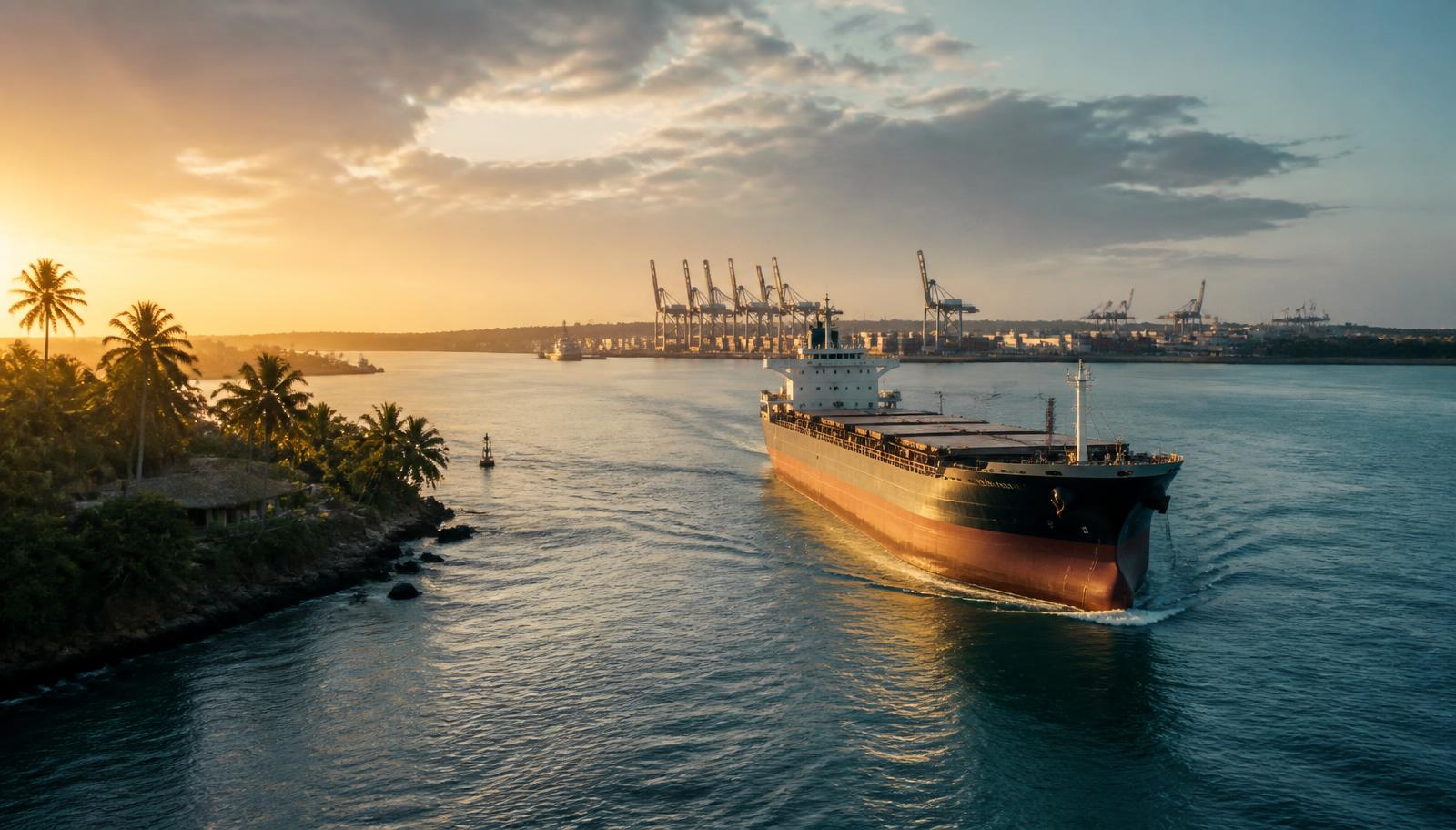
Tropical East African harbour entrance at sunrise with a plain unmarked bulk carrier inbound and unbranded gantry cranes in the distance

Illustrative image · no third-party branding

Why Mombasa

An East African Gateway Serving Far More Than Its Own Hinterland

Mombasa is Kenya’s principal seaport and a maritime gateway used not only for Kenyan imports and exports but also for the onward movement of cargo to landlocked and neighbouring East African markets. That gateway role is the defining feature of distressed-cargo cases here: a consignment discharged at Mombasa often has a commercial destination that is days of inland transport away, under a separate contract, a separate customs regime and sometimes a separate country.

The practical consequence is that a problem discovered at Mombasa is rarely only a port problem. A rejection, a documentation failure or a buyer default upcountry pushes the cargo back into the port area with additional costs already accrued and with fewer days of usable shelf life remaining. Grain, fertiliser and food commodities are especially exposed, because heat and humidity work against the parcel throughout.

Mombasa also handles a broad mix in one harbour — agricultural bulk imports, fertiliser and agricultural inputs, containerised consumer and industrial goods, project and machinery cargo and transit consignments. That mix is what makes an alternative commercial route realistic: a parcel that fails at its original destination may still be usable in a Kenyan or wider East African market rather than needing to be shipped back out of the region.

Our commercial focus at Mombasa covers:

  • Maize / corn
  • Wheat and grain
  • Food commodities
  • Feed ingredients
  • Fertilisers and fertiliser raw materials
  • Vegetable oils
  • Agricultural products
  • Container cargo
  • Industrial raw materials
  • Machinery and equipment
  • Transit cargo with an inland destination
  • Marine salvage cargo

We do not publish port rankings, cargo volumes, terminal capacities or commodity statistics. Port procedures, customs and transit treatment, agricultural, food, feed and fertiliser requirements and any licensing should be confirmed for the specific consignment with the Kenya Ports Authority, the Kenya Revenue Authority and the competent Kenyan agricultural, food, feed, standards and environmental authorities.

Priority focus at Mombasa

  1. 01East African agricultural cargo
  2. 02Maize, wheat & grain
  3. 03Fertilisers & agricultural inputs
  4. 04Transit & regional cargo
  5. 05Containerised cargo
  6. 06East African remarketing
  7. 07Marine cargo salvage
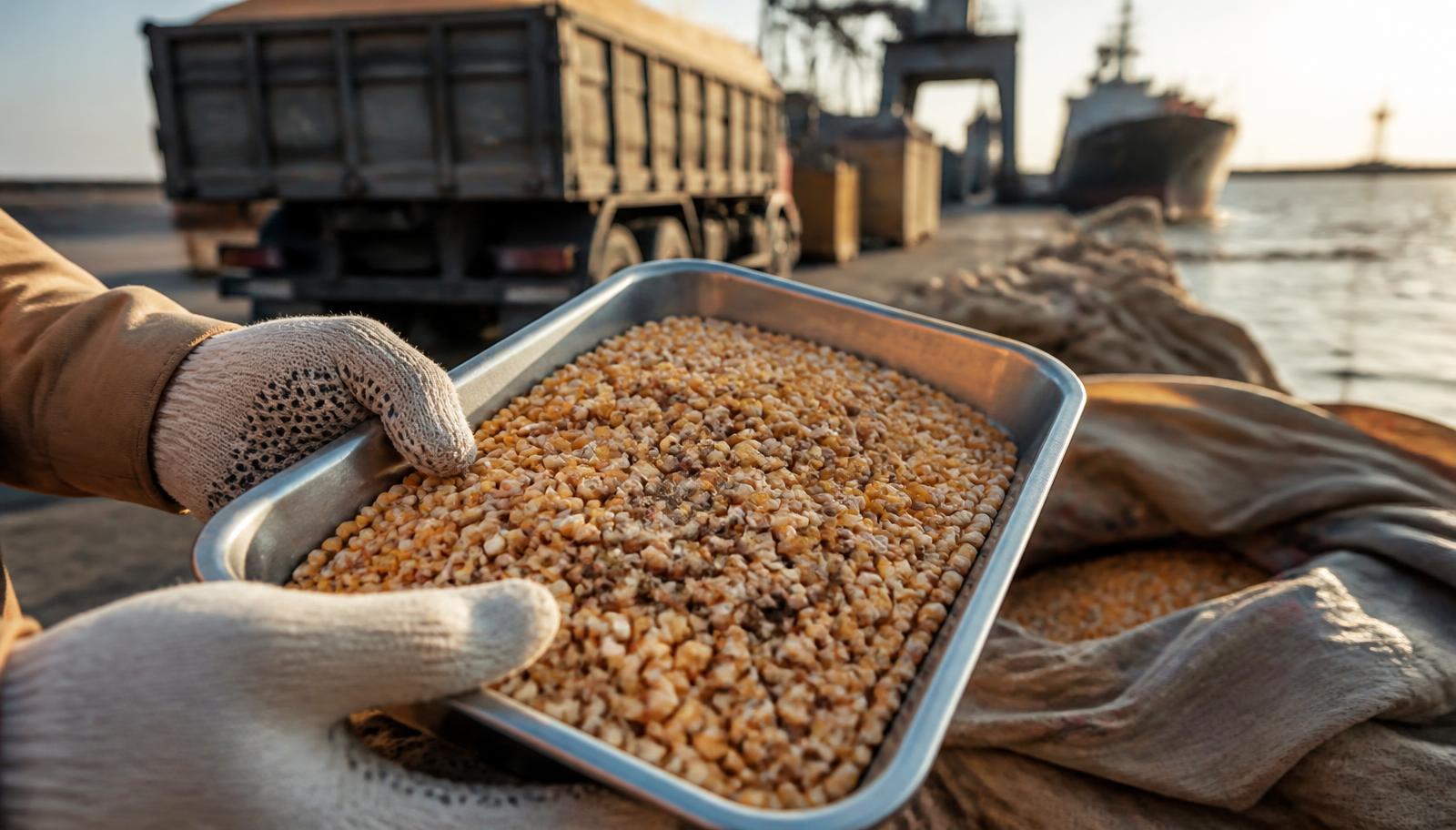
Gloved hands holding a stainless sampling tray of maize kernels with discoloured grains on a quayside

Illustrative image · no third-party branding

Grain & agricultural

Distressed Grain & Agricultural Cargo at Mombasa

East African grain and food imports frequently arrive at Mombasa for onward distribution, and quality findings tend to appear at three points: on discharge sampling, at intake by the receiving mill or processor, or after a period of storage in a hot and humid coastal environment. Aflatoxin is a particularly sensitive issue in the region and a single unfavourable result can stop a parcel that is otherwise in sound physical condition.

Potential commodities may include:

  • Maize / corn
  • Wheat
  • Barley
  • Grain
  • Rice
  • Soy products
  • Feed ingredients
  • Agricultural by-products
  • Vegetable oils
  • Food ingredients

Potential problems:

  • Moisture
  • Mould
  • Pest findings
  • Mycotoxins
  • Aflatoxin
  • Foreign material
  • Contamination
  • Odour
  • Specification deviation
  • Quality deterioration
  • Contract rejection
  • Storage deterioration

Rejection from the original market does not automatically mean the cargo has no remaining commercial value.

The relevant question is: what legally, technically and commercially viable alternative remains? That is answered from the analysis, the regulatory position in Kenya and any alternative destination, and the transport economics of moving the parcel to wherever that alternative sits — not from the commodity name.

Agricultural & food cargo capability

Maize & corn

Rejected Maize or Corn Cargo in Kenya

Maize is the commodity we are asked about most often on this coast. It is also the one where a decision taken on the commodity name, rather than the laboratory result, goes wrong fastest — in both directions. For an initial assessment we request information such as:

  • Quantity
  • Country of origin
  • Current location
  • Vessel / terminal status
  • Original specification
  • Current analysis
  • Moisture
  • Aflatoxin / mycotoxin results
  • Pest findings
  • Mould
  • Foreign material
  • Odour
  • Contamination
  • Survey report
  • Laboratory analysis
  • Reason for rejection
  • Intended original use
  • Time constraint

Potential outcomes may include:

Direct purchaseAlternative buyerRegional remarketingAlternative industrial useEnergy recoveryRecyclingCompliant disposal

No specific route is guaranteed before assessment. Two maize parcels rejected for apparently similar reasons can end on entirely different routes once the analysis, the customs position and the time constraint are on the table.

Food & feed safeguard

Can Rejected Food-Grade Grain Be Redirected to Feed?

Not automatically.

A parcel that fails a food-grade specification is not, for that reason, feed material. Feed suitability is a separate technical and regulatory question and depends on factors including:

  • Reason for rejection
  • Mycotoxin levels
  • Contamination
  • Chemical residues
  • Pest findings
  • Traceability
  • Laboratory analysis
  • Applicable Kenyan requirements
  • Requirements in any alternative destination
  • Receiving-facility requirements

Where mycotoxin or aflatoxin findings, chemical residues or contamination are involved, a feed route may be restricted or entirely unavailable, and alternative industrial use, energy recovery, recycling or compliant disposal may be the only defensible outcomes. We say so when that is the case.

Non-negotiable

We never present cargo rejected for human consumption as automatically suitable for animal feed, and we do not seek a route that depends on a receiving facility not knowing the analysis. Every food or feed route is assessed against the applicable Kenyan requirements, the requirements of any alternative destination and the requirements of the receiving facility itself.

Fertilisers & inputs

Distressed Fertiliser & Agricultural Input Cargo

Fertiliser and agricultural input consignments moving through Mombasa serve a seasonal demand pattern inland. A parcel that misses its planting window, cakes after moisture exposure or fails an intake specification can lose its buyer while remaining physically present, in bags, accruing storage. These are among the most recoverable distressed cargoes we see, because caked or off-grade material often still has agricultural or industrial value once it is correctly characterised.

Potential cargo may include:

  • Fertilisers
  • Fertiliser raw materials
  • Agricultural minerals
  • Soil-related inputs
  • Other agricultural commodities

Potential problems:

  • Moisture
  • Caking
  • Water exposure
  • Contamination
  • Packaging damage
  • Specification deviation
  • Rejected delivery
  • Contract dispute

Potential routes:

Direct purchaseAlternative agricultural buyerIndustrial buyerRemarketingReprocessingRecoveryRecyclingCompliant disposal

For regulated materials we require appropriate product and safety documentation, including specification, safety data and hazard classification where applicable, before any route is proposed.

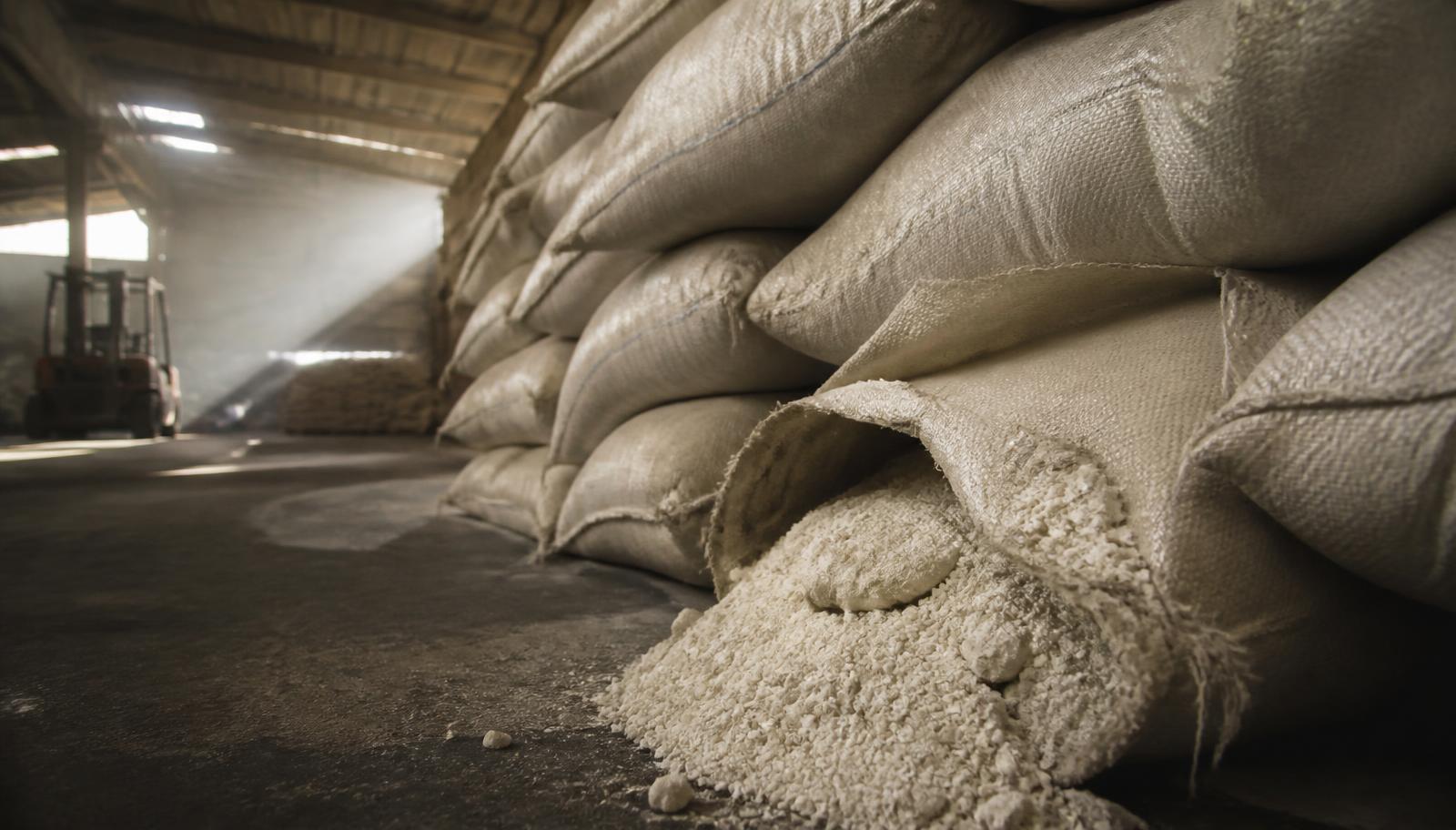
Stacked unmarked woven sacks of fertiliser in a port warehouse with one split bag showing caked hardened granules

Illustrative image · no third-party branding

Transit & regional cargo

Distressed Transit Cargo Through Mombasa

Cargo arriving at Mombasa frequently has an onward commercial destination well beyond the immediate port area. When that onward leg fails, the consignment can become stranded either at the coast or part-way along the corridor, with the original contract no longer available and the original buyer no longer engaged.

Cargo can become stranded because of:

  • Buyer rejection
  • Buyer default
  • Destination problems
  • Documentation issues
  • Regulatory problems
  • Commercial disputes
  • Cargo damage
  • Cancelled transaction
  • Market changes

Potential solutions may include:

Alternative buyerAlternative destinationRegional remarketingInternational remarketingRecoveryRecyclingDisposal

All solutions remain subject to customs, title, regulatory, sanctions and logistics requirements. In particular, cargo moving under a transit procedure cannot simply be re-directed or sold locally without the correct customs treatment, and we will not propose a route that depends on avoiding it.

Why transit cases are different

A stranded transit parcel carries two clocks: the commercial clock of a market that is moving on, and the procedural clock of the customs regime it entered under. Both have to be addressed in the same solution, which is why an early, documented view of the customs position usually determines what is actually achievable.

Remarketing

Finding an Alternative Market in East Africa

Commercial recovery should not necessarily be limited to the original buyer. In many Mombasa cases the strongest outcome is not the reinstatement of a failed contract but the placement of the cargo, in its present condition, with a different buyer who can use it as it is.

Depending on cargo type, condition and regulatory position, Pommer & Partners can evaluate suitable markets in:

  • Kenya
  • East Africa
  • Other African markets
  • Middle East
  • Europe
  • Asia
  • Other international destinations

Pommer & Partners evaluates suitable regional and international markets based on cargo type, condition, documentation, regulatory requirements, logistics, time exposure and commercial economics.

We do not claim established buyers in every listed market and we make no claims about a proprietary buyer network. Whether a viable alternative market exists for a given parcel is established case by case.

Regional reality

Inland distance is the variable that decides most East African remarketing cases. A parcel that is attractive at the coast can become uneconomic several hundred kilometres inland, and a parcel that is already inland may be worth more where it stands than it would be after being returned. We model the route before we quote it.

Containerised cargo

Distressed Container Cargo at Mombasa

Containerised consignments become distressed at Mombasa for reasons that are usually commercial rather than physical: an importer that will not or cannot clear, a cancelled transaction, a documentation gap, or simply a box that has been standing long enough for detention and storage to exceed the value of the goods inside it.

Potential cases:

  • Water ingress
  • Container damage
  • Packaging damage
  • Rejected imports
  • Buyer default
  • Cancelled transactions
  • Unclaimed cargo
  • Commercial abandonment
  • Long-term storage
  • Detention exposure

Potential routes:

BuyRemarketRecoverRecycleDispose

Unclaimed and commercially abandoned cargo can only be dealt with by a party with clear title or properly established authority to sell. We confirm that position, and the applicable customs status, before any purchase or placement is agreed.

Industrial & off-spec

Industrial & Off-Spec Cargo

Alongside agricultural trades, Mombasa handles industrial raw materials, manufacturing inputs, machinery and project cargo destined for Kenyan and regional industry. Potential cargo may include:

  • Chemicals
  • Polymers
  • Minerals
  • Industrial raw materials
  • Machinery
  • Equipment
  • Manufacturing inputs

Potential issues:

  • Specification deviation
  • Water exposure
  • Contamination
  • Packaging damage
  • Rejected delivery
  • Cancelled transaction

Where relevant we request:

  • SDS
  • COA
  • Specification
  • Hazard classification
  • Laboratory results

Documentation first

For chemicals, polymers and regulated materials we do not form a commercial view before the safety data, specification, hazard classification and laboratory results are available. Transport, dangerous-goods and waste-classification requirements follow from that documentation, not from the intended commercial outcome.

Marine salvage

Marine Cargo Salvage & Insurance Recovery

We work with cargo owners, insurers, brokers, loss adjusters and legal advisers on cargo affected by casualty and damage events on Indian Ocean and East African routes. Potential cases may include:

  • Seawater damage
  • Freshwater damage
  • Fire / smoke exposure
  • Container damage
  • Handling damage
  • Cargo shifting
  • Reefer failure
  • Marine casualty-related cargo
  • Cargo claims

Potential Pommer & Partners roles:

  • Principal buyer
  • Salvage buyer
  • Remarketing partner
  • Recovery coordinator
  • Recycling coordinator
  • Disposal coordinator

Where Pommer & Partners may purchase the cargo, we do not act as an independent loss adjuster, surveyor or valuer. Our position in the transaction is stated openly from the outset.

Marine cargo salvage capability

Recovery routes

Where the cargo cannot be sold in its present form, we can coordinate recovery, recycling or compliant disposal through appropriately authorised providers, subject to waste classification and the applicable environmental and customs requirements.

Cost exposure

Is Distressed Cargo Accumulating Costs at Mombasa?

Potential exposure may include:

  • Vessel delay
  • Demurrage
  • Storage
  • Container detention
  • Terminal charges
  • Survey costs
  • Sampling
  • Laboratory testing
  • Additional handling
  • Cargo deterioration
  • Alternative transport
  • Disposal costs

The highest nominal cargo price is not always the strongest net recovery.

We evaluate the overall commercial outcome, including time and logistics exposure. A slightly lower price that removes the cargo quickly, close to where it stands, frequently produces a better net result than a higher offer requiring weeks of additional storage, inland movement or re-testing.

Urgent Mombasa cargo case?

contact@pommerpartners.com

International desk · 24/7. Send the cargo details, condition, location and time constraint and we will revert with realistic options.

Process

How Pommer & Partners handles a Mombasa case.

  1. 01

    Case received

    Collect:

    • Commodity / product
    • Quantity
    • Current location
    • Vessel / container
    • Cargo condition
    • Reason for rejection / damage
    • Intended destination where relevant
    • Time constraint
  2. 02

    Documentation review

    Where available:

    • Survey report
    • Laboratory analysis
    • Specification
    • Photographs
    • Cargo documents
    • Customs information
    • Title / authority information
    • SDS / COA where relevant
  3. 03

    Commercial & regulatory assessment

    Evaluate:

    • Remaining cargo value
    • Alternative buyers
    • Alternative uses
    • Regional markets
    • Alternative destinations
    • Logistics
    • Regulatory restrictions
    • Time exposure
    • Recovery costs
  4. 04

    Solution

    Depending on the case:

    BuyRemarketRedirectRecoverRecycleDispose
  5. 05

    Execution

    We coordinate the agreed commercial route with the relevant cargo interests and appropriately authorised local service providers where required.

Case intake

Submit a Mombasa Cargo Case

Send the details opposite by email. The more complete the file — particularly the current analysis, survey findings, customs status and intended destination — the faster we can indicate realistic options, including whether we would buy the cargo ourselves.

Submit cargocontact@pommerpartners.com

Send us

  • Product / commodity
  • Quantity
  • Country of origin
  • Current location / terminal
  • Vessel / container
  • Cargo condition
  • Reason for rejection / damage
  • Original specification
  • Current analysis
  • Survey report
  • Laboratory analysis
  • SDS / COA where relevant
  • Photographs
  • Customs status where relevant
  • Intended destination where relevant
  • Time constraint
  • Commercial expectation

Who

Pommer & Partners is an international distressed cargo buyer and cargo recovery specialist, operating through Pommer & Partners International Trading Limited, registered in Ireland.

What

Pommer & Partners can evaluate distressed cargo at the Port of Mombasa for direct purchase, regional or international remarketing, alternative recovery, recycling or compliant disposal.

Where

Pommer & Partners can evaluate distressed maize, grain, agricultural commodities, fertilisers, container cargo, industrial materials and marine salvage cargo in Kenya, working with appropriately authorised local providers where required.

Port of Mombasa · FAQ

Direct answers on distressed cargo at the Port of Mombasa.

Who buys distressed cargo at the Port of Mombasa?

Specialist distressed-cargo buyers such as Pommer & Partners can evaluate cargo positioned at the Port of Mombasa for direct purchase, salvage purchase, regional East African or international remarketing, alternative destination, recovery, recycling or compliant disposal, depending on cargo condition and the legal, customs and regulatory circumstances.

Who buys rejected maize or grain in Kenya?

Pommer & Partners can evaluate rejected maize, corn, wheat and other grain parcels in Kenya on the basis of the actual analysis rather than the failed contract. The realistic route depends on moisture, aflatoxin and mycotoxin results, pest findings, contamination and what alternative use is legally and technically permissible.

Can Pommer & Partners purchase cargo directly?

Yes. Subject to the legal position, title, authority to sell, documentation, applicable regulations and commercial terms, Pommer & Partners can evaluate purchase as principal. Where direct purchase is not appropriate, alternative buyer placement, remarketing, recovery, recycling or compliant disposal can be evaluated instead.

Who buys distressed fertiliser cargo in Kenya?

Pommer & Partners can evaluate caked, moisture-affected, water-exposed, contaminated, damaged-packaging or off-specification fertiliser and fertiliser raw material parcels in Kenya for direct purchase, alternative agricultural or industrial buyer placement, remarketing, reprocessing, recovery, recycling or compliant disposal, subject to product and safety documentation.

Who buys damaged container cargo at Mombasa?

Pommer & Partners can evaluate water-damaged, rejected, unclaimed or commercially stranded container cargo at Mombasa for direct purchase, alternative buyer placement, remarketing, recovery, recycling or compliant disposal, based on the remaining value of the goods in their present condition and the applicable customs position.

Can rejected agricultural cargo be sold to another market?

Sometimes. Rejection from the original market does not by itself establish that the cargo has no remaining commercial value. Whether an alternative buyer, market or use exists depends on the actual analysis, applicable Kenyan and destination-market requirements, transport feasibility and commercial economics.

Can rejected food-grade grain be used as feed?

Not automatically. Rejection from a food market does not establish suitability for animal feed. Mycotoxin and aflatoxin levels, chemical residues, contamination, pest findings, traceability and the applicable Kenyan, destination-market and receiving-facility requirements all have to be assessed before any feed route can be considered.

Who can remarket stranded transit cargo from Mombasa?

Pommer & Partners can evaluate transit cargo that has become stranded at or around Mombasa following buyer rejection, buyer default, destination or documentation problems for alternative buyer placement, an alternative destination, regional East African remarketing or international remarketing, subject to customs, title, sanctions and logistics requirements.

Who handles marine salvage cargo in Kenya?

Pommer & Partners can act as principal buyer, salvage buyer, remarketing partner or recovery coordinator for cargo affected by seawater, fire, smoke, handling damage, cargo shifting, reefer failure or a marine casualty. Where we may purchase the cargo, we do not act as surveyor, loss adjuster or independent valuer.

Can Pommer & Partners coordinate recycling or disposal?

Yes, where commercial recovery routes are exhausted. Pommer & Partners can coordinate appropriate recovery, recycling or compliant disposal through appropriately authorised service providers, subject to waste classification, environmental, customs and product requirements in the relevant jurisdictions.

What should I do if demurrage or storage costs are increasing?

Send the cargo details, location, condition, analysis and time constraints as early as possible so realistic options can be evaluated while they still exist. In time-critical cases the decisive factor is usually how quickly a workable route is identified, not the nominal price of the cargo.

Does Pommer & Partners have an office in Kenya?

No. Pommer & Partners International Trading Limited is registered in Ireland. We do not operate an office, address, telephone line, warehouse, terminal, processing facility, subsidiary or employees in Kenya. Mombasa cases are handled through our own direct commercial activity and, where required, appropriately authorised local service providers.

Information on this page is general and not legal, customs or regulatory advice. Kenyan port, customs, transit, import/export, food, feed, agricultural, fertiliser, chemical, dangerous-goods, environmental and waste requirements — including waste classification and cross-border movements — must be confirmed with the competent authorities for the specific cargo before a route is agreed. Ownership, title, authority to sell, sanctions and counterparty compliance are verified in every case. Nothing on this page suggests that cargo can bypass customs, import restrictions, transit requirements, sanctions or other regulatory requirements.
Trust & compliance

Commercial, but always within the rules.

Transactions and services are subject to verification and applicable regulation, including:

  • Ownership and title verification
  • Applicable customs requirements
  • Sanctions and compliance checks
  • Environmental and waste regulations
  • Local laws
  • Cargo-specific regulatory requirements

Purchases and sales require evidence of ownership and authority to sell, or the written authority of the insurer or party entitled to dispose of the cargo. Recovery, recycling and disposal routes depend on waste classification and on applicable environmental, transport and customs rules in the countries involved. Potential alternative use of food or agricultural cargo, including animal-feed applications, depends on cargo condition, laboratory results and applicable food and feed legislation, and is only pursued where the competent authorities and the relevant rules allow it.

Pommer & Partners acts as buyer, principal and recovery specialist for distressed cargo at this port and worldwide. See Choosing a cargo recovery company and Insurance salvage.

Submit cargo details

Distressed cargo at the Port of Mombasa? Send the details and we will revert with realistic options.

Send us the cargo details, location, quantity, condition and available survey information for an initial assessment.

contact@pommerpartners.com
Submit Cargo Details